Rosacea
Rosacea, also known as acne rosacea, is a chronic disease that can manifest in both the skin and the eyes. As of 2013 it is not known what the cause is. There is a connection between the disease and dysfunction of the oil glands in the face, neck and shoulders. It was once thought that this is a more common disease in people with light skin color, but it may actually be more difficult to identify the disease in people with darker skin. Although it is a fairly common disease with various ocular manifestations such as blepharitis, it is still not diagnosed frequently enough by ophthalmologists. The reason it is not diagnosed enough may be because ophthalmologists work in relatively dark rooms.
There may be a connection between drinking alcohol and the disease, although most of those with the disease do not report excessive alcohol drinking in their past.
Rosacea, which is essentially a skin disease at its base, manifests quite frequently in the eyes. It manifests in the eyes through over-secretion from the oil glands combined with stubborn chronic blepharitis. In a large proportion of cases one can identify telangiectasias at the eyelid margins, distortion/damage to the meibomian glands and recurrent cases of chalazia.
All of the above can lead to chronic inflammation of the conjunctiva (chronic conjunctivitis), infiltration of the corneal margins, sterile ulcers, episcleritis or iridocyclitis.
If these findings are treated at early stages one can reach a full recovery. On the other hand, insufficient treatment or recurrent cases of inflammation of the outer surface of the eye can lead to the formation of blood vessels on the cornea (corneal neovascularization) and scarring of the cornea in a wedge shape.
The characteristic age of onset of the disease is between 30-60 and it is more common in women. Despite this, the disease can be identified in younger patients.
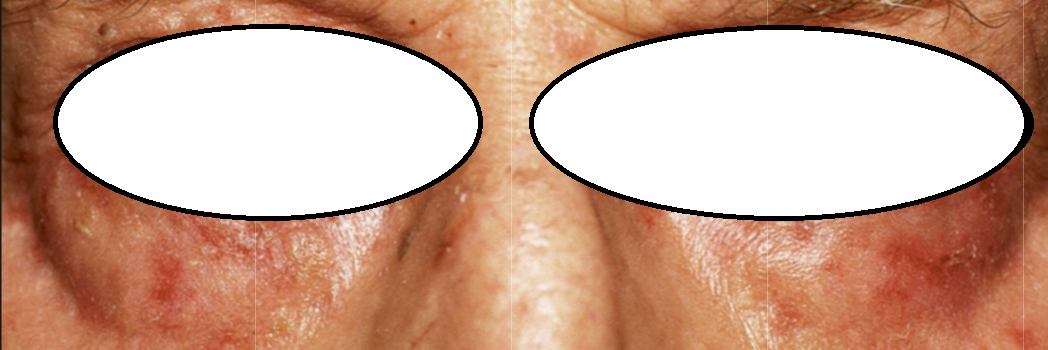
The findings on the facial skin are usually telangiectasias, recurrent papules and pustules and redness in the center of the face (midfacial erythema). Rosacea is characterized by a malar rash with unpredictable flushing episodes that are sometimes caused by drinking alcohol, coffee or other specific foods.
Treatment of rosacea
Treatment in the early stages of ocular rosacea
The treatment of the early stages of the ocular and systemic disease are treated simultaneously with systemic tetracyclines. Tetracyclines have an additional anti-inflammatory activity that contributes to clinical improvement in acute episodes of this disease. In addition, one can apply a gel based on topical metronidazole to the affected areas of the face.
Treatment of ocular rosacea with Intense Pulsed Light known as IPL
IPL is a treatment that has been in use for treating rosacea for over 20 years. In recent years there is increasing use of IPL treatment adapted for ocular rosacea. This is a series of 3-4 monthly treatments that last about 10 minutes each and are not painful. This treatment leads to an improvement in symptoms in 80-90% of patients, and it is recommended to perform a single additional treatment every 6-12 months. The price of a single treatment costs about 1,000 shekels (not cheap but, as noted, 90% feel a significant improvement after the treatment). One can combine the treatment with heating and manual expression of the glands, which takes about another 5-10 minutes.
Treatment in advanced stages of ocular rosacea and in complications
Rosacea can lead to ulcerative inflammation of the cornea (ulcerative keratitis) through infectious agents or in a sterile form. After verifying that there is no infectious component one can perform a treatment trial with topical steroids in order to reduce the inflammatory component. In cases where there is already advanced disease with scarring and neovascularization, one usually settles for conservative treatment. Corneal transplantation surgery (penetrating keratoplasty or PKP) is a procedure with many risks in these patients with a poor prognosis.
Have a question about your eyes? Want a specialist opinion?