What is the definition of a cataract?
In the anterior chamber of the eye is the lens. The lens is responsible for concentrating the light rays so that they converge optimally on the retina of the eye. A cataract is a clouding of that lens that can lead to a deterioration in vision.
What are the symptoms of a cataract?
A cataract leads to a disturbance in vision. Most patients report a feeling of blurred vision, some report a change in the colors of the world (darker), and some report a constant need for new glasses because the old ones "no longer suit them". Paradoxically, some people report a marked improvement in near vision as a symptom of a cataract.

How is a cataract diagnosed?
Sometimes, in a very advanced cataract, the cataract can be identified in a simple physical examination. In most cases, an examination under a slit lamp by an ophthalmologist is needed, who can diagnose a cataract very simply. During the examination, the ophthalmologist will rule out additional diseases that can lead to a decline in vision. In most cases, dilation of the pupils is needed in order to look at the retina and the optic nerve to check that there is no additional explanation for the vision disturbances.
Can the development of a cataract be prevented?
Many studies have examined various and unusual treatments in an attempt to prevent the continued development of a cataract in patients at different stages of the disease. Most studies failed to prove the efficacy of any treatment. There are studies that proved a connection between smoking and a faster development of a cataract. Therefore, the smokers among us have an additional reason to stop smoking – and that is to lower your chances of suffering from a cataract.
How is a cataract treated?
A considerable proportion of the patients diagnosed with a cataract are diagnosed at a relatively early stage without significant disturbance. In such situations, it may be decided by your ophthalmologist together with you that there is no need to operate yet. If it is a significant vision disturbance and the ophthalmologist gets the impression that the patient can "gain" significantly from cataract treatment, then the main treatment is surgical. In cataract surgery the clouded lens is removed and an artificial lens is inserted instead. Cataract surgery is considered a relatively safe surgery, but like any surgery, cataract surgery too has possible complications (intraocular infections, for example).
How do you decide when to operate on a cataract?
This is a very good question. There are several components to the decision regarding the timing of cataract surgery. The decision should be made together with your ophthalmologist when there are several considerations. The main question here is risk versus benefit. Therefore it is important to understand how much the vision will improve as a result of the surgery. In addition, it is important to understand what the patient's background diseases are in order to understand what the risks are when operating on that patient. In addition, the physician must explain to the patient that they may need glasses after the surgery, especially reading glasses, since the patient will lose the ability to perform accommodation after the implantation of the artificial lens. Therefore, in the end, the decision whether to perform the surgery or not is actually the patient's, after they have received all the information about the advantages and disadvantages of performing the surgery.
Monofocal lens
During cataract surgery the lens we are born with is taken out and replaced with an artificial lens. There is a wide range of artificial lenses to choose from. For many patients the best choice is a monofocal lens. A monofocal lens is the most common lens and allows sharp vision at a single distance point (a single focal point). One can choose a lens that will allow sharp vision for far distance, intermediate range or near vision. If a monofocal lens for good far vision is implanted in both eyes, the patient will need glasses for intermediate-range vision (working at a computer, for example) and near range (reading a book or newspaper).Monovision
Is there a possibility of seeing well far and near with a monofocal lens? Yes. It is possible to implant a lens for good far vision in one eye and in the other eye choose the focal point a bit closer (intermediate range, for example). This will allow good far vision (driving) and intermediate distance (computer) with low dependence on glasses. It is also possible to aim the second eye for good near vision (but then there will be blurred vision for intermediate range). In addition, if one eye is aimed for far and one eye for near, then there may be a situation in which a large difference between the eyes (anisometropia) leads to a feeling of eye strain and headaches (asthenopia).Toric lens
About a third to a half of the population have a significant corneal cylinder (astigmatism) (over 0.75 diopter), and 30% over 1.5 diopter. A residual of the above cylinder after cataract surgery leads to a need for glasses for all the different distances (far, intermediate, near) in order to see in focus. Toric lenses are built in such a way that in a certain direction their optical power is different, and therefore when they are implanted they are placed at a fitting angle and thus correct the corneal cylinder. In about 1–5% of cases the lens can rotate inside the capsule after implantation, and therefore patients should be warned that there is a (small) chance that they will need to undergo additional surgery to correct the rotation of the lens (IOL rotation).Multifocal lens
For patients who wish to lower their dependence on glasses there is a possibility of implanting a multifocal lens. Multifocal lenses have the ability to give suitable patients functional vision for near, intermediate and far in each eye separately. This ability arises from the multifocality (multiple focal points) of the lens, which causes light rays to be split so that several optimal focal points are created. However, all multifocal lenses have possible disadvantages. Almost all lenses can lead to a decrease in contrast sensitivity and optical phenomena, especially at night, and therefore it is very important to choose the right patient and understand the patient's needs in order to see whether there is a multifocal lens that meets the needs and to explain the possible disadvantages. The ideal patients for a multifocal lens are flexible in nature, with reasonable demands and expectations, and low dependence on glasses is important to them. In addition, it is important that they have the potential for good vision without any additional ocular pathology along the entire visual axis. It is advisable to rule out problems in the macula (the center of the retina) and to rule out retinal degeneration, an epiretinal membrane and any other problem that can lead to poorer results. In addition, the cornea must be evaluated carefully and it must be verified that there is no endothelial dystrophy (such as Fuchs) or very dry eye, since such patients can also find themselves with additional problems in the future that will further lower the contrast and impair the quality of vision. If there is a corneal cylinder over 0.75 diopter, it is highly advisable to combine a multifocal lens with a toric lens in order to achieve ideal results.News and articles about cataract
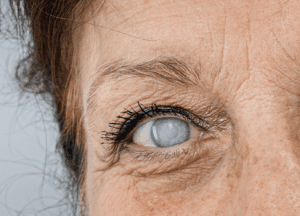
Cataract removal without surgery
Cataract removal without surgery – where is the future taking us? A cataract, an eye condition characterized by clouding of the natural lens, is the leading cause of reversible vision loss around the world. Although surgical intervention remains the treatment
Read the full article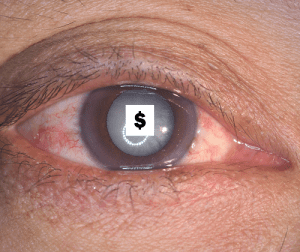
Cataract surgery price
Not infrequently, patients want to find out the price for cataract surgery. First of all one must understand what a cataract is. A cataract is in fact a clouding in the natural lens of the eye. The lens, in its healthy state, is completely transparent and thus allows
Read the full article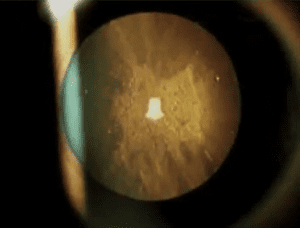
Types of cataract
Which different types of cataract exist? Does it affect the decision whether to operate and when to operate, and does it bear on the results of cataract surgery? These are common questions among patients about to undergo surgery
Read the full article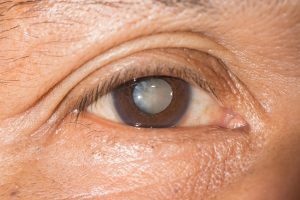
Cataract surgery recovery
Cataract surgery recovery – what to expect? Is fast recovery expected after cataract surgery? After cataract surgery under local anesthesia you should be able to return home on the same day on which the cataract surgery was performed
Read the full article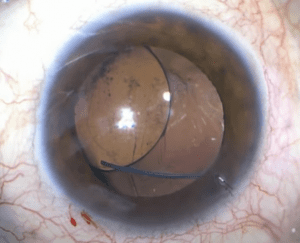
Cataract surgery complications
For every surgery in medicine, in ophthalmology too, there are possible complications. For cataract surgery too, complications may occur. For most patients cataract surgery is a simple surgery without complications, with fast recovery and improvement
Read the full article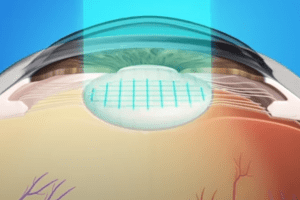
Private cataract surgery
Is it possible to perform private cataract surgery? Private cataract surgery can be performed at several different centers, with several different surgeons and in several different financial frameworks. The basic surgery can be performed within the health-basket framework
Read the full articleHave a question about your eyes? Want a specialist opinion?