The aging process of the eye's lens
Acquired cataract is a condition in which, as we age, so too our lens undergoes a process of "aging". As it ages, the eye's lens increases in weight and thickens along with a decrease in the ability to perform accommodation. The nucleus of the lens begins to undergo a process called nuclear sclerosis, in which the lens becomes harder and denser. The proteins inside the eye's lens begin to undergo changes that ultimately lead to impairment of the quality of transparency. In addition, the color of the lens begins to change toward the colors yellow and brown (at a later stage).
The change described is one of the most common causes of impairment of vision quality in adults, and it is called acquired cataract or senile cataract. There are apparently several different causes for these changes and some are not yet known to us. Acquired cataract can be divided into three main types: nuclear, cortical, posterior subcapsular.
Acquired nuclear cataract
In adults, the nucleus of the lens over time becomes yellow as part of the natural process of aging; if the color becomes noticeable enough and interferes with vision then it is already called nuclear cataract. Any ophthalmologist can identify and grade the degree of cataract with the help of a simple examination under a slit lamp.
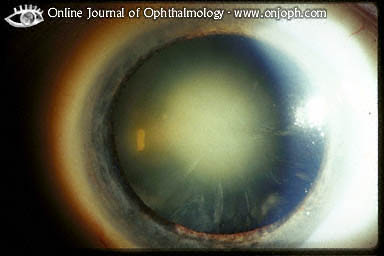
Cataract of this type usually develops over time, at a slow pace in both eyes simultaneously. Its manifestation is usually impairment of distance vision and it usually increases the refractive power of the lens. This phenomenon of changes in refraction can cause several phenomena:
- Second sight – people with presbyopia who need reading glasses report an improvement in near vision to the point of not needing reading glasses, and therefore this is called "second sight".
- Monocular diplopia – double vision in one eye only. That is, only one eye is responsible for the double vision (even when the other eye is covered).
- Hue discrimination – impairment in the ability to distinguish between colors (especially the various shades of blue).
When the nucleus of the lens becomes very cloudy and brown this is already called brunescent cataract.
Acquired cortical cataract
Cortical cataract is usually bilateral although asymmetric (that is, more developed in one eye than the other). Its manifestation is very varied and the pace of development varies greatly in each person (compared to nuclear cataract that usually develops very slowly). A very common symptom of this type of cataract is that people will report a feeling that light from strong sources is especially dazzling and glaring (glare phenomenon).
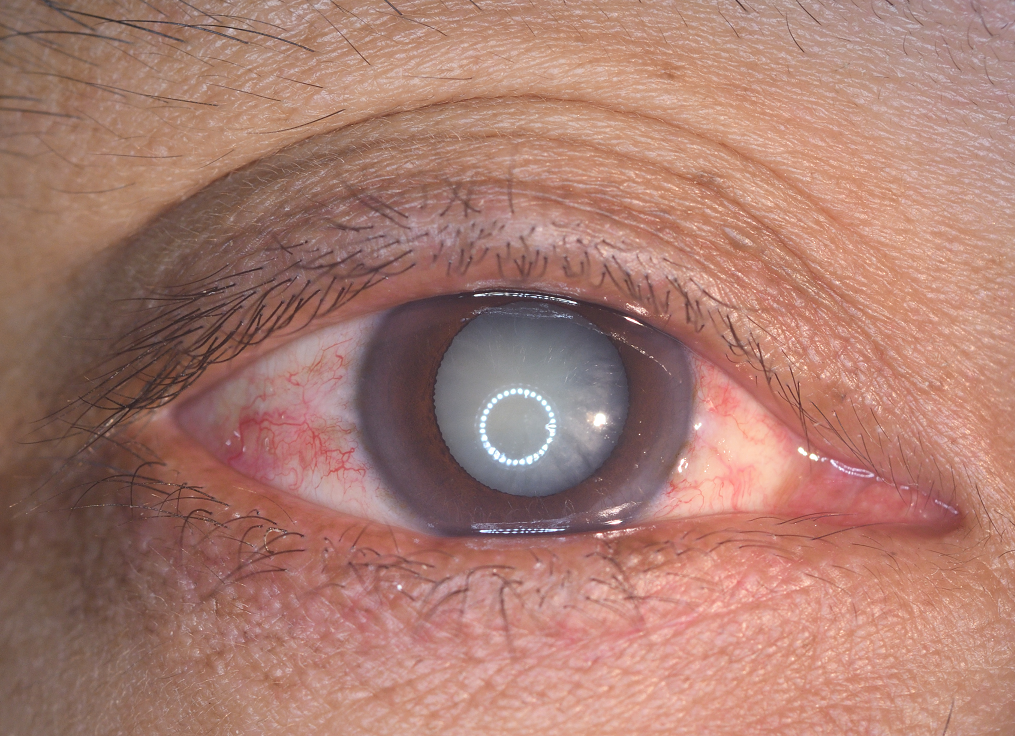
Cortical cataract develops in several stages that can be identified under a slit lamp:
- Vacuoles and water clefts – a kind of water droplets that appear in the anterior or posterior cortex.
- Cortical spokes – wedge-shaped opacities with the base in the peripheral area and the point pointing toward the center.
- Mature cataract – when the entire cortex (from the capsule to the nucleus) is opaque and white.
- Hypermature cataract – when the lens begins to shrink after leakage of material beyond the capsule and the capsule remains wrinkled.
- Morgagnian cataract – when the cortex is sufficiently shrunken and begins to rotate freely inside the remaining capsular bag.
Acquired posterior subcapsular cataract
Cataract of this type is located in the posterior cortex and usually appears in a younger population than the other two types of cataract. People will usually report a feeling of glare and a decrease in vision in strong light because the strong light brings about constriction of the pupil and then the cataract covers a (relatively) larger part of the potential visual axis. In addition, near vision is impaired more than distance vision. Some patients will complain of double vision. Beyond the aging process, additional factors can contribute to the development of a posterior subcapsular cataract such as: trauma, steroids, chronic inflammations and more…
Have a question about your eyes? Want a specialist opinion?