Tearing eye – key concepts
- Tearing eyes (epiphora), or chronic overflow of tears, is caused by overproduction, obstruction of outflow or failure of the tear pump.
- Chronic irritation of the external ocular surface is a common source of tear overproduction.
- The tear pump is mediated by contraction of the orbicularis oculi muscle and the medial canthal tendon.
- Examination of tearing eyes should include an assessment of the position of the eyelid margin and lashes, the frequency and effectiveness of the blink reflex, the conjunctiva, conjunctivochalasis, tear-duct function and tear-pump function.
- Treatment of a tearing eye from overproduction is by treating the underlying cause.
- Treatment of a tearing eye secondary to obstruction of the tear ducts depends on the location of the obstruction.
- Treatment of tear-pump failure usually requires surgery/tightening of the lower eyelid.

Introduction to tearing eyes
Tears are essential for the normal function of the eyes. Tears form not only a protective lubricating layer, but also an optical refractive surface, and provide immunoglobulins and lysozyme to fight potential infection. Excess tears are usually normal and necessary in order to wash debris from the eye or to dilute toxic chemicals that may harm the eye upon injury. Furthermore, a tearing eye can be caused by emotional distress.
Epiphora (tearing eyes) is an abnormal condition, describing the chronic overflow of tears onto the cheek. There are many different causes of tearing eyes. These causes can be divided into three general categories: chronic overproduction of tears, obstruction of tear outflow, and tear-pump failure.
Overproduction of tears as a cause of tearing eyes
The accessory lacrimal glands (the glands of Krause and Wolfring) mediate the production of basal tears. When the conjunctiva or cornea is irritated, reflex tearing begins in the main lacrimal gland. Secretion of the lacrimal gland is controlled by parasympathetic fibers from the superior salivary nucleus that travel along the facial nerve to the maxillary branch of the trigeminal nerve to the lacrimal gland. If the tear reflex is severe, it may be too much for the tear-outflow system and lead to tearing eyes and spillage onto the cheeks (production > outflow).
Chronic irritation of the external ocular surface is the most common cause of tearing eyes. Tear dysfunction is a common cause of chronic eye irritation. The conjunctiva produces the mucous layer, the lacrimal gland produces the aqueous layer and the Meibomian glands produce the lipid (oily) layer. Pathology affecting these structures, such as blepharitis (chronic inflammation of the eyelids) or inflammation of the conjunctiva, can cause a tearing eye. Conditions that distort the natural contours of the eye surface can also cause chronic ocular irritation and overflow of tears. Lash and eyelid disorders such as trichiasis or entropion can also cause chronic eye irritation and lead to tearing eyes.
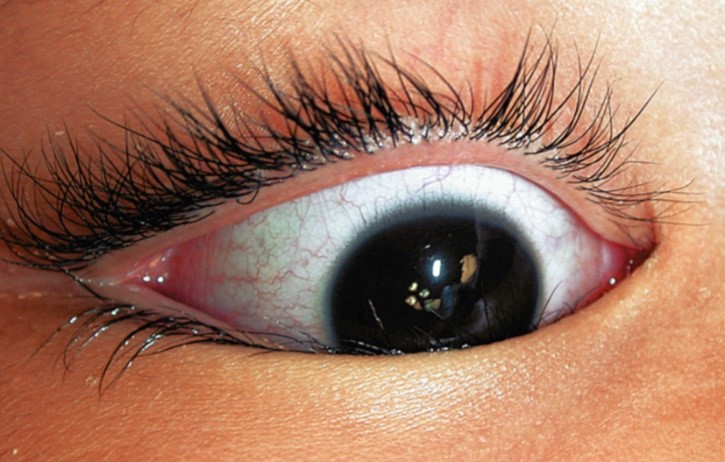
Tearing eye – continued exposure of the external eye surface can lead to breakdown of the epithelial layer, chronic eye pain and subsequently tearing eyes. The causes of chronic exposure are numerous but can be divided into two categories: an abnormality of the eyeball such as proptosis (proptosis or bulging eye), and eyelid distortion such as lid retraction. An intra-orbital process such as a tumor, inflammation or thyroid eye disease can cause proptosis. Lid retraction usually develops due to degenerative (age-related) changes but can also occur as a result of thyroid disorders (thyroid eye disease), as a result of scarring, or changes after surgical intervention or laser treatment. Facial nerve paralysis and lack of muscle tone of the orbicularis can cause incomplete closure of the eyelid and only a partial reflex and blink, leading to chronic exposure of the external eye surface.
Obstruction of the tear ducts
Tear flow begins with a capillary action, which draws the tear lake up to the punctum of the eyelid. The tears are then actively pumped into the ampulla and the canaliculus with each blink. From the canaliculus, the tears are pumped through the valve of Rosenmuller into the lacrimal sac and then down the nasolacrimal duct and finally exit through the valve of Hasner into the inferior meatus beneath the inferior turbinate. A congenital anomaly, obstruction or reduced flow can occur at any point along this complex route.
Tear pathway: punctum -> ampulla -> canaliculus -> valve of Rosenmuller -> lacrimal sac -> nasolacrimal duct -> valve of Hasner -> inferior meatus.
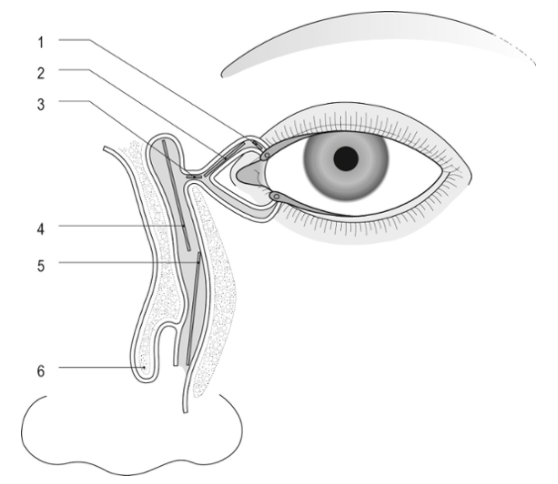
Punctal obstruction
The punctum is the first possible site where an obstruction of the tear ducts may form. If the punctum is ectropic (not in the correct place), stenotic (narrowed) or completely closed, tearing eyes can occur. Furthermore, in conjunctivochalasis, a redundant fold of the conjunctiva may loosen to cover the opening of the punctum and block the flow of tears. An enlarged caruncle may also block the punctum, necessitating a partial punctum resection. Partial narrowing of the punctum can be secondary to scarring, external irradiation and chronic exposure.
Canaliculus obstruction
Obstruction in the canaliculus can also cause tearing eyes. The causes include trauma, resection of tumors, scarring and more. In addition, topical eye medications and chemotherapy agents such as 5-FU and a breast-cancer treatment called Docetaxel can all cause scarring of the canaliculus.
Lacrimal sac obstruction
Obstruction can also occur in the lacrimal sac and cause a tearing eye. Tumors inside or around the sac may create resistance to flow or complete obstruction. Bloody discharge may be seen and a palpable mass may also be present. Malignant tumors are more common than benign ones within the sac; the most common are epithelial tumors including inverted papillomas, squamous cell carcinoma and adenocarcinoma. Non-epithelial tumors include lymphoma/leukemia, histiocytoma and melanoma. Other rare conditions such as sarcoidosis can create an obstruction in the sac.
Nasolacrimal duct obstruction
Primary nasolacrimal duct obstruction is a common cause of tearing eyes in adults. Chronic inflammation from the eye, or inflammation rising from the nose that provokes recurrent swelling of the mucous membrane inside the duct, can eventually lead to its closure and scarring. Complete obstruction of the duct can lead to dacryocystitis (infection of the duct). The secondary causes of duct obstruction include traumatic facial injury, complications from sinus surgery, migration of punctal plugs, sarcoidosis, granulomatosis with polyangiitis, Stevens-Johnson syndrome and radioactive iodine treatment for carcinoma of the thyroid gland. It is important to note that bilateral obstruction, especially in younger patients, is associated with secondary conditions such as congenital syndromes, inflammatory diseases and systemic medications, compared to unilateral obstruction.
Hasner valve obstruction
A membranous obstruction at the valve of Hasner is the most common cause of congenital tear-duct obstruction. Inflammation of the sinuses from upper respiratory tract diseases can also interfere and cause inflammation of the inferior turbinate and cause obstruction of the duct in the region of the valve.
Diagnosis of the cause of tearing eyes
Taking a thorough history, including current topical and systemic drug treatments, seasonal allergies, exposure to animals, a background of surgeries and traumas and more, will often explain the cause of a tearing eye. A careful examination by a specialist with a slit lamp may demonstrate problems on the external surface of the eye and help distinguish between overproduction and obstruction of outflow.
Have a question about your eyes? Want a specialist opinion?