Can cataract surgery be done privately?
Private cataract surgery can be carried out at several different centres, with a number of different surgeons and under several different financial arrangements. The basic operation can be performed within the public health basket at no cost, or you can choose to pay extra for specific services, but many patients prefer to have cataract surgery privately. In doing so they can choose to use innovative technologies such as a laser, choose advanced premium lenses, and choose the surgeon who will perform the operation. All of this can be done privately, through private medical insurance, or through supplementary insurance with a health fund, according to the terms of each fund.
Private cataract surgery — cost
The range of costs is wide and derives from several factors. Besides the operation itself, a pre-operative consultation is needed, at which you get to know the operating surgeon, preliminary tests are carried out, and decisions are made on different variables such as the laser and the type of lens to be implanted, according to the patient's individual needs. The consultation itself costs a few hundred shekels when it is done privately. The cost of the operation itself also varies from surgeon to surgeon, according to experience and skill with the various technologies. There may be an additional cost for the operating theatre; it is important to clarify in advance whether the price quoted includes this.
Are there advantages?
As noted, as part of private cataract surgery the patient gets to choose the surgeon, and that matters a great deal.
The surgeon's experience — cataract surgery is the most common medical procedure performed by ophthalmologists. It is worth choosing a surgeon who performs cataract operations routinely and frequently, and who has extensive experience in the field.
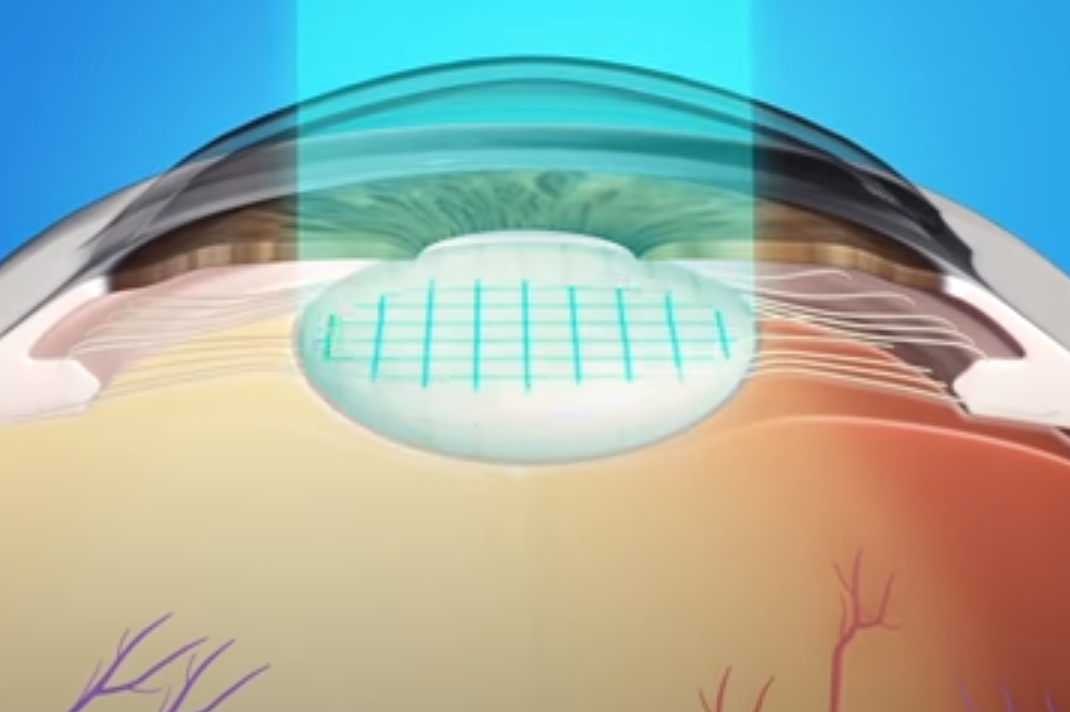 Technology — significant progress in cataract surgery has come from the use of a laser to perform the operation, which replaces manual steps by the surgeon and allows them to be carried out more precisely and more delicately. The use of a laser can improve the safety and the results of the procedure and shorten the recovery period. A cataract surgeon should be skilled in the new techniques for treating cataracts.
Experience in implanting premium lenses — an intraocular lens (IOL) is the lens implanted in place of the natural lens that has become cloudy and is impairing vision. The traditional lens is a monofocal lens, and it allows focus either for near or for distance. As a result, the patient will need to use glasses after surgery. Thanks to advances in technology, the market now offers improved premium lenses of various types, such as multifocal lenses and toric lenses (which treat astigmatism), that can spare the patient the need for glasses after surgery — something that may be significant and improve quality of life for many patients. If the patient is considering the implantation of a premium lens, it is worth choosing a surgeon who works with these lenses and has experience implanting them.
How should you choose a private cataract surgeon?
It is important to choose a surgeon you feel comfortable with on a personal level. This is a medical procedure, and there may be many questions before and after the operation. The surgeon should take the time to explain and to answer honestly, in detail and with patience. Having the operation done privately also makes it possible to schedule the appointment quickly and easily, compared with the public system, where the wait can be long and the operation delayed. There are several hospitals and medical centres that offer private surgery and have arrangements with the various health funds and with private insurers. Among these centres are Ein Tal Center, Medical Eye Center, Atidim Medical Center, Assuta Hospital, Medica Center, Maayan Medical Center and others.
What is cataract surgery?
Cataract surgery is a common eye operation in which the clouded lens of the eye is replaced with a clear artificial intraocular lens (IOL) that improves vision. A cataract causes blurred vision, dim vision, difficulty seeing near or far, and haloes around lights, and so can interfere with the patient's daily activities such as driving, working and reading. Cataract surgery is most common among patients over the age of 65, although there are several medical conditions and risk factors that can cause a cataract to appear at an earlier age. The operation is a successful treatment, with a success rate of around 98% and a significant improvement in vision. Some patients will need glasses after surgery in order to enjoy the best possible vision. The operation improves focus, reduces glare from bright lights and strengthens the tone of colours, and afterwards the patient enjoys a marked improvement in quality of life.
What preparation is required before private cataract surgery?
A pre-operative assessment is needed before surgery. The operating surgeon will perform biometry — measurements needed to select the lens that will be implanted — and will ask about the patient's ocular and general medical history. During the operation the pupils are dilated and a local anaesthetic is given. Once the anaesthetic has taken effect, the surgeon makes tiny incisions at the edge of the cornea, through which the instruments are introduced and through which the damaged lens will also be removed. Using a phaco device, which is based on ultrasound, the lens is broken up into fragments that are removed from the eye. The natural lens is then replaced with an artificial lens that has been matched in advance to the patient's measurements and needs. Sutures are usually not needed to close the incisions in the cornea, since they heal naturally over time. The operation usually lasts less than an hour and you can be discharged home the same day, though of course the length of time may vary and depends on many factors such as the severity of the cataract, accompanying eye conditions, general health, the surgical technique and the surgeon's skill.
Have a question about your eyes? Want a specialist opinion?