There are five different types of laser eye surgery, each with a slightly different surgical and recovery process. Each surgery can suit specific patients under certain conditions. It is important to note that the surgical risks are low and almost all patients get good results after the surgery. But it is worth consulting a specialist before making a decision on the surgery most suitable for the patient's needs.
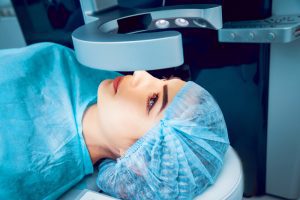
General
Laser eye surgery is one of the most common medical procedures performed today. This surgery makes it possible to significantly improve the quality of vision and accordingly leads to an improvement in quality of life.
Laser glasses-removal surgery is intended to solve a condition of nearsightedness (myopia), to solve a condition of farsightedness (hyperopia) or to correct a cylinder (astigmatism). In general, it can be said that this is a relatively short surgery, during which a change of the surface of the cornea of the eye is made by a laser beam.
Who cannot have laser eye surgery?
As part of the preparation for laser eye surgery, a suitability examination for the various eye surgeries is first performed, by the operating surgeon and an appropriate medical team. Within this examination the patient will be asked about their routine habits and about their medical history and that of their eyes. Subsequently, several technical tests are performed that are intended to make the course of the surgery precise and to tailor it to the patient - these tests will mainly include a thorough examination of various vision and eye measures. At the end of the testing process, if the patient is found suitable, the patient will be scheduled for the chosen surgery and afterwards - for several medical follow-ups.
The conditions for suitability for laser eye surgery vary between the different treatment institutes, but usually laser eye surgery can be performed from the age of 18 and after a period of more than half a year in which there has been no change in the glasses prescription. Nevertheless, there are several restrictions under which laser eye surgery cannot be performed. Among the various conditions limiting the performance of the surgery are:
- Those with an unstable glasses prescription
- Those with very high nearsightedness
- Those with very high farsightedness
- Those with various eye diseases
- Those with autoimmune diseases (sometimes)
- Pregnant women
- AIDS patients
- Active cancer disease
- Chronic use of steroids
Types of laser eye surgery
LASIK (Laser Assisted in-situ Keratomileusis)
This surgery is suitable for patients with nearsightedness, farsightedness and also for those with a cylinder. In this surgical method, the splitting of the cornea is performed by a mechanical blade and not by a laser. As part of the surgery, a cut is made in the cornea of the eye to create a thin flap - therefore, patients with a cornea that is too thin are not suitable for this surgery. The surface of the cornea remains intact at the end of the surgery, so recovery from it is considered very fast, as is the patient's return to routine. This surgical method is considered a relatively old method and today it is mostly not used. Accordingly, the use of the more modern intra-LASIK method has begun.
intra-LASIK
This is the newest and most advanced method for splitting the cornea, which is performed with the help of a laser. With the laser it is possible to mark the location of the corneal split. In this way it allows flexibility for the surgeon, surgery in thinner corneas and surgery with high safety.
LASEK (Laser-Assisted Sub-Epithelial Keratectomy)
This is a gentle glasses-removal surgery done in the outer layer of the eye. The surgery is especially suitable for people who have a thin cornea. Moreover, surgery by this method is suitable for patients who have a risk of eye injury in their work.
PRK (Photorefractive Keratectomy)
This surgical method is the oldest method. This surgery is suitable for patients who have nearsightedness. This surgical method benefits patients who have a thin cornea or who maintain a sporty lifestyle. As part of the surgery by this method, removal of the layer of cells coating the cornea is performed. After the surgery, a therapeutic contact lens is placed on the cornea whose purpose is to encourage the renewed growth of the cells. Accordingly, patients who undergo this surgery see well without glasses a few days afterwards. This surgery is considered a technically easy surgery, very fast, and with a high level of safety and maximum precision. At the same time, there is a recovery period lasting about a week with a gradual improvement of vision.
trans-PRK
This is a vision-correction method performed in the outer part of the cornea of the eye without the use of cuts or any other surgical instrument. This surgical method has a longer recovery period but the method is considered the safest method. Thanks to the high level of safety of the method, the risk of infection decreases significantly, the degree of damage to the structure of the cornea is very small and the chance of dry eye is low.
LTK (Laser Thermal Keratoplasty)
This method is used to treat farsightedness by means of a beam of special laser energy to reshape the cornea. LTK is a non-contact laser procedure, since there is no cutting of the cornea. As part of the surgery, the focal point of the eye is changed and eye tissue is not removed in the procedure.
Results and risks of laser eye surgery
It is important to emphasize that in all methods the results are identical. After several months, the quality of vision without the use of glasses is identical between the surgeries. As noted, the differences between the methods are related to the recovery process from the surgery and to the way the surgery is performed. As a rule, laser eye surgery is considered safe as long as it is performed properly.
Most of the side effects of the surgeries pass a few months afterwards. They mainly include a sensation of dry eye and seeing halos of light. More severe conditions of side effects are possible, such as clouding, distortion or infection in the cornea after laser eye surgery - but these are very rare.
In principle, the results of the surgeries hold up for a long time. However, it is possible that some of the patients who underwent the surgeries will need an additional surgery in the future, in order to preserve visual acuity - this mainly concerns patients who had a high cylinder or a high prescription.
For patients with prescriptions that are too high or corneas that are too thin, it is possible in certain cases to offer intraocular glasses-removal surgeries such as lens implantation (phakic intraocular lens) or replacement of the existing lens with an artificial lens (clear lens extraction).
Have a question about your eyes? Want a specialist opinion?