Were you looking for information about keratoconus and the army or keratoconus and the military profile? You have come to the right place! Today we will explain to you everything you want to know about keratoconus patients and about the effect of this disease on the military profile at the time of conscription; keep reading to discover more!
Keratoconus is a progressive eye disorder that affects the shape of the cornea, which is the clear, dome-shaped front surface of the eye. In people with keratoconus, the cornea gradually thins and becomes cone-shaped instead of its usual round shape. This abnormal curvature of the cornea can lead to distorted and blurred vision.
The overwhelming majority of eye problems manifest in adulthood. For example, glaucoma is an example of a disease whose prevalence increases as age advances, and cataract is diagnosed mainly in adults aged 60 and over.
In contrast to these, keratoconus appears at a young age, can have an effect even during adolescence and therefore – may harm the military profile. Here we will discuss the IDF's approach to keratoconus patients, the military profile and the options available to conscripts.

Keratoconus and the military profile
Keratoconus disease causes the assignment of a medical impairment clause in the military profile in accordance with its severity. Therefore, the existence of keratoconus must be reported during the process of military conscription and medical screening. In accordance with the severity of the disease and the characteristics of the eye discovered during the examination, keratoconus reduces the military medical profile.
That is, the military profile of keratoconus patients will be decided on the basis of the severity of the keratoconus, the measured visual acuity, the mapping of the eye's shape and signs accompanying the disease. Keratoconus defined at a mild to moderate degree of severity reduces the medical profile to a lesser extent compared with advanced keratoconus.
As noted, the degree of the effect of keratoconus on eligibility for military service can vary in accordance with the severity of the condition, the requested military role and the up-to-date military regulations.
In certain cases, candidates for security service with keratoconus may face restrictions or possible disqualification due to the potential effect of the condition on their ability to carry out military roles effectively and safely.
Possible restrictions are based on the quality of vision. Military service often requires soldiers to meet certain vision standards, including visual acuity, field of vision and the ability to correct the vision by means of eyeglasses or contact lenses.
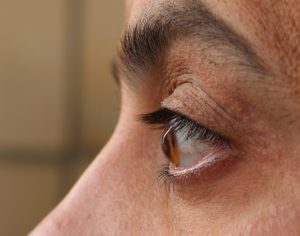
Keratoconus can lead to blurred and distorted vision that may not be adequately correctable with standard eyeglasses or contact lenses, especially in more advanced cases. This may affect the soldier's ability to meet the vision standards required for military service.
Moreover, military service often involves physically demanding activities, including training, combat exercises and various environments. People with keratoconus may experience increased sensitivity to light, glare and visual disturbances, which may affect their performance and safety during these activities.
Keratoconus and the army
If new conscripts with keratoconus are not satisfied with the military medical profile that has been determined for them, they can submit an appeal. The appeal should be submitted through the accepted channels together with relevant medical documents.
In addition, if there has been a worsening in the disease, in the structure of the cornea or in the visual impairment from the moment the medical profile was determined, one should report to the army and request a renewed examination and an update of the profile. If there is a concern that the new profile will prevent the candidate from serving in a certain role, one can try to submit a special request together with a recommendation from a specialist ophthalmologist.
Prof. Michael Mimouni is a specialist surgeon ophthalmologist in the field of keratoconus; he can be contacted at the telephone number 058-644-5151
Have a question about your eyes? Want a specialist opinion?