Is there really a cost for a corneal transplant?
If the procedure is performed in a public hospital then the cost of a corneal transplant is nil (the cost of a corneal transplant in a public hospital: free for the patient). By contrast, if one decides to perform a corneal transplant privately then there is a cost for a corneal transplant. And it is not cheap.
What actually is the cornea and what is its role?
The cornea is a transparent, dome-shaped layer covering the front part of the eye. Except at the margins, the cornea does not contain blood vessels but it has many nerves that make it very sensitive to pain or touch. The cornea protects the more internal eye organs from penetration by foreign bodies and in addition has a role in refracting the light rays entering the eye and focusing them together with the lens. There are many factors that can cause irreversible damage to the cornea, from an eye infection to trauma. For some patients who suffer from severe eye damage, a corneal transplant (keratoplasty) is the only option for restoring vision. The nature or severity of the damage caused to the cornea will determine which drug treatment is needed in addition to the surgery in order to achieve optimal vision results. Also, a thorough eye examination will reveal the specific corneal layers requiring replacement and it will be decided which type of surgery is most suitable for the patient.
Who needs corneal transplant surgery?
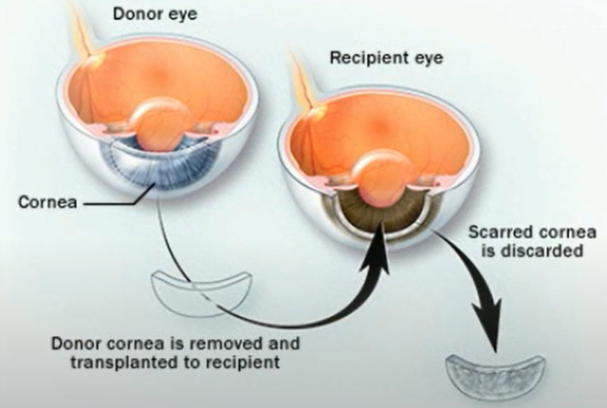 Corneal transplant surgery is an option for treating a case of severe corneal damage and is usually the last resort when drug treatment or aids such as lenses or glasses cannot restore or preserve the patient's vision. Some of the vision problems that a corneal transplant can treat:
Keratoconus – a condition in which the cornea bulges outward, steep like a cone shape, and becomes thinner and thinner over time. There are treatments that precede a corneal transplant in this case, but about 15-20% of patients will need a transplant at some stage.
Eye infections – eye infections can cause swelling and irreversible scarring of the cornea. The infections can be bacterial, viral (like herpes) and fungal. The function of the cornea is impaired when it loses its transparency, and therefore such opacity does not allow clear vision. If the treatment of the infection does not heal the corneal layers that were damaged, replacement of corneal tissue can be the only solution in such a case.
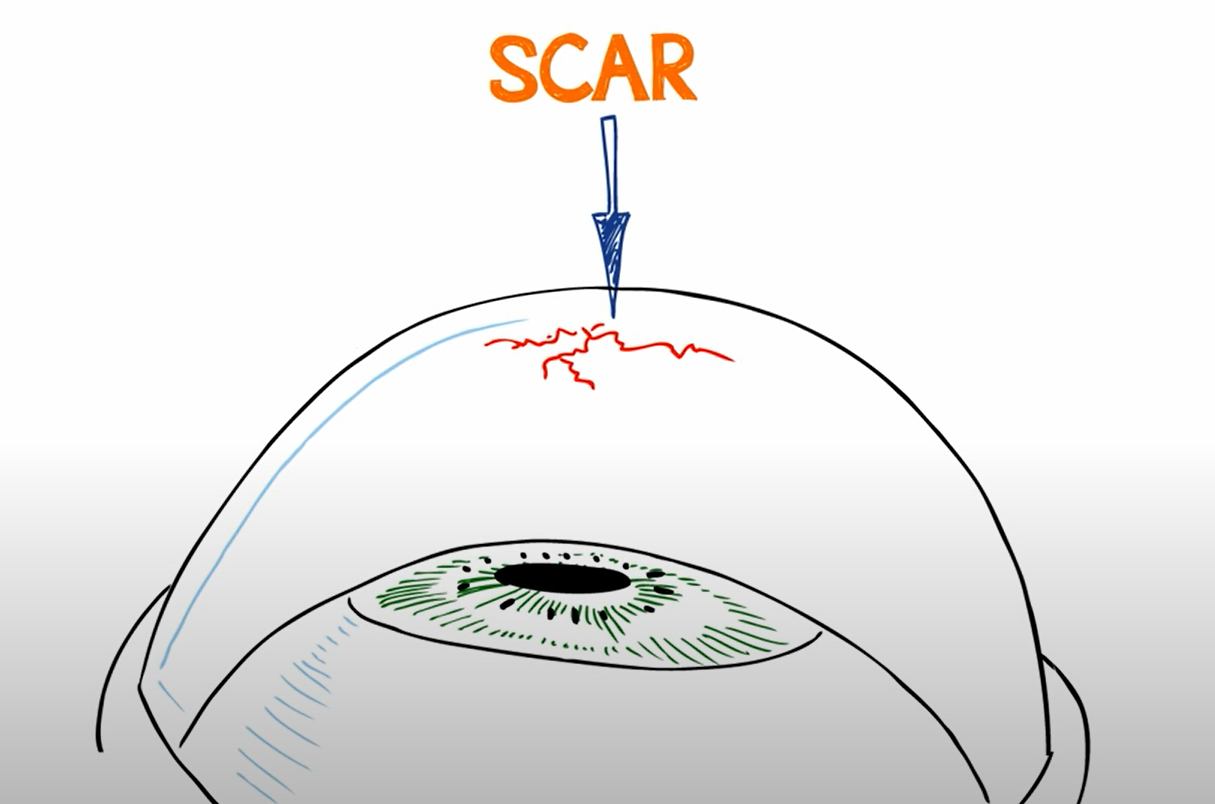 Corneal damage – scratches on the surface of the cornea or a tear in deeper corneal layers can also severely impair vision. Previous eye surgeries (such as cataract) can also lead to corneal damage as part of the complications.
The surgery: the surgeon places a special device that keeps the eyelids open and exposes the surgical site. The following steps depend on the specific type of surgery chosen as suitable for the patient's corneal damage. Usually only the damaged layer in the cornea is removed and replaced with a similar part of a donor's corneal tissue. The surgeon can replace all the layers of the cornea (a full-thickness transplant), the layer of cells from the surface of the cornea, its middle part or the innermost layer.
What determines the cost of a corneal transplant?
Like any tissue-transplant surgery, a corneal transplant can be complicated and requires skill and expertise of the surgical team. As a result the cost of the surgery is also high, but since the surgery itself is included in the national health basket it is funded by the health funds. If the patient chooses a private doctor there is participation up to full coverage of the surgery costs by private insurance, according to the various policies.
If the patient chooses to turn to a private doctor, one should take into account that the surgery costs include additional services besides the surgeon's fee: anesthesia, the operating room, the transplanted corneal tissue, pre-surgery services including doctor consultation and laboratory tests, post-surgery care including follow-up, medications and eye drops (including antibiotic and steroid drops), examinations and the availability of the doctor in cases of complications and consultations.
 There is an advantage to performing the surgery in a private clinic thanks to high availability, personal accompaniment and attention, the equipment is usually innovative and the use of advanced techniques, the schedules are more flexible and the waiting times relatively short, and of course the option to choose the operating surgeon.
Recovery: after the surgery a shield will be placed on the eye in order to reduce the risk of injury or infection in the surgical area. The eye can be red and sensitive to light, painful and the vision blurred. The doctor will instruct on using eye drops to reduce inflammation and to prevent infection, and pain medications if there is a need for that. On the day after the surgery a follow-up will be performed, and so too several times during the following year. It is important to remember that healing of the cornea is slow because it does not contain blood vessels. If sutures were placed during the surgery, the treating doctor will remove them at follow-up meetings after the graft has taken. It is important to adhere to the doctor's instructions regarding conduct before and after the surgery in order to achieve optimal vision results.
Most patients who have undergone a corneal transplant will gain improved vision, but every case is different. Recovery can take a few weeks up to a year and one must use patience. It is important to fit glasses or contact lenses to correct astigmatism (cylinder) that can be created in the surgery. Usually the transplanted tissue lasts for the rest of one's life.
Have a question about your eyes? Want a specialist opinion?