What is corneal replacement surgery?
Corneal replacement surgery (corneal transplant) is a surgery in which the cornea is replaced with corneal tissue from a deceased donor, and it is one of the most common transplants performed.
What is the cornea and why is corneal replacement surgery needed?
The cornea is the transparent outer layer at the front of the eye, and it allows light to enter the eye to create its focus. When the cornea is damaged it may become cloudy or hazy and thereby lose its function, leading to visual impairment or even complete loss of vision.
Can corneal replacement surgery be avoided?
If the cornea is not severely damaged, treatment may include contact lenses or laser treatment in addition to treating the source of the problem, and there may be no need for a corneal transplant at this stage. But if the impairment of vision is significant, a corneal transplant may be the optimal solution, and it is important to examine each case on its own merits. A corneal transplant may be recommended in several cases, among them: thinning of the cornea (usually due to a disease called keratoconus), scarring of the cornea after severe eye infections or injuries, complications following other eye surgeries, and vision loss caused by clouding of the cornea (usually because of Fuchs dystrophy).
What should I expect before such a surgery?
Before the procedure, a consultation and various examinations will be performed in order to match the relevant type of surgery for the patient. A complete medical history will be taken, including general medical history and eye history in particular, allergies and regular medications, risk factors and alignment of expectations ahead of the surgery. In accordance with the operating surgeon's instructions, fasting before the surgery will be required, as well as avoiding the use of makeup or face cream.
Does corneal replacement surgery include anesthesia?
The surgery will be performed under general or local anesthesia in addition to sedation. During the surgery itself, all layers of the affected cornea will be replaced, or selectively only specific layers will be replaced according to the cause of the corneal damage and the state of the eye, and in their place complementary corneal tissue from a deceased donor will be placed. There is no need to perform matching of the corneal tissue routinely, and the donated tissue will be checked for the presence of infections.
What can I expect after the surgery?
After the surgery, a patch will be given, which should be worn according to the instructions (usually a few days) in order to protect the eye. In addition, eye drops will be given that will help faster healing of the eye and prevent infection, inflammation or rejection of the graft. If sutures need to be removed, this will be done at a follow-up visit, but it is important to know that the sutures can remain for a longer period if required, or may not be removed at all, and this should be discussed with the treating physician.
What are the risks of corneal replacement surgery?
A corneal transplant is one of the most successful procedures for transplanting tissues or organs, but as with any procedure it too may be accompanied by side effects and complications, including: bleeding in the eye, cataract, detachment of the transplanted cornea, infection inside the eye or in the cornea itself, refraction problems requiring correction by contact lenses or glasses, a new appearance of glaucoma or worsening of existing glaucoma, and more. Another important risk is rejection of the corneal graft.
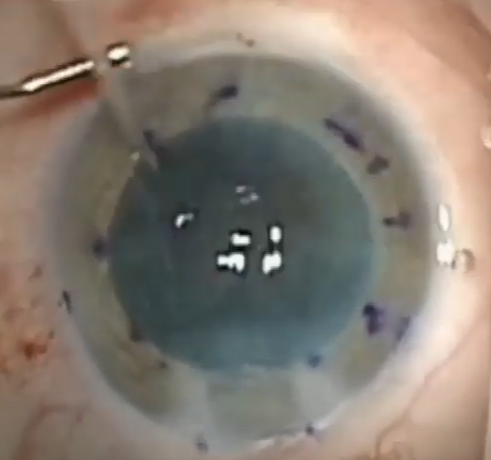
The patient's immune system may recognize the donor tissue as foreign tissue and produce an immune response against it that will harm and lead to rejection of the new cornea. This rejection can occur several months and up to several years after the transplant surgery. Graft rejection can be reversible in most cases if it is treated quickly, and the graft can continue to function optimally. However, if the rejection is very severe, persists for a long period, or involves multiple episodes of rejection, the graft may be harmed and lead even to loss of vision. It should be noted that a repeat corneal transplant can be performed if the transplant fails, but it must be taken into account that such a transplant has a higher chance of complications and the final results tend to be less good than those of an initial transplant. The overall risk of complications varies according to several factors, among them the patient's age, existing medical conditions, additional eye problems and the reason that led to the need for a corneal transplant. To prevent graft rejection, it is important to follow the treating physician's instructions before and after the surgery and to tailor the surgery as much as possible to the specific patient.
What to expect after corneal replacement surgery?
In most cases one can go home on the day of the surgery, but an escort is needed to help with mobility. It is normal for vision to be blurred during the recovery period, but this is expected to pass, and full recovery of vision may take up to a year. The blurring of vision happens because the cornea is swollen immediately after the surgery, which impairs its transparency, but as noted, it passes.
If one or more of the following signs appear, it may be the development of a complication and medical help should be sought: worsening of eye redness, sensitivity to light, decrease in vision or pain.
Most patients who have undergone a corneal transplant will enjoy improved vision for many years. Contact lenses or glasses may be needed to achieve optimal vision, or laser correction after full recovery from the transplant.
Have a question about your eyes? Want a specialist opinion?