Yellow eyes can be caused by a pinguecula, xanthelasma, bilirubin, a subconjunctival haemorrhage, jaundice and liver disease, or a rare infection caused by the Leptospira bacterium. Other conditions in which yellow eyes may appear include pancreatic infections and haemolytic anaemia, in which red blood cells are destroyed at an increased rate.
The naturally white colour of the conjunctiva can sometimes change to a yellowish tone for a variety of reasons. Eye diseases, infections and indeed many systemic illnesses can all cause yellow eyes. If you notice in the mirror that there is a yellow colour in your eyes, there may be several causes for it — from simple, benign ones through to more dangerous medical conditions. You should therefore be examined by a specialist ophthalmologist so that appropriate monitoring and medical investigation can begin.
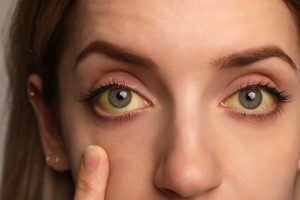
Yellow spots on the eye
A yellow spot on the eye is usually called a pinguecula. It is connective tissue that grows on the conjunctiva of the eye following exposure to UV radiation. A pinguecula looks like a deposit of white or yellowish material on the conjunctiva of the eye, mainly around the cornea. A pinguecula usually has no symptoms and does not interfere with normal vision. Even so, there may be cases in which a pinguecula becomes inflamed and appropriate anti-inflammatory treatment is therefore required, or in which it causes cosmetic discomfort and the need arises to remove it surgically. As noted, a pinguecula is common in areas where there is increased exposure to UV radiation, such as regions with a tropical climate.
Yellow spots around the eye
Yellow blisters or yellow patches around the eye are called xanthelasma. Xanthelasmas appear mainly on the upper and lower eyelids. The presence of a xanthelasma is a conspicuous and uncomfortable cosmetic nuisance, but it can be removed by a relatively simple surgical procedure. In most cases the appearance of a xanthelasma is directly related to the levels of cholesterol in the blood and to blood lipid levels. This is because a xanthelasma is a deposit of cholesterol that has accumulated under the skin. Even so, there may be various genetic conditions in which the appearance of a xanthelasma is not related to blood cholesterol levels. As noted, a xanthelasma is not in itself harmful, but it may point to a problem of excess lipids in the blood that is worth investigating.
Jaundice and liver disease
Significantly raised levels of the substance bilirubin can cause yellow eyes to appear. This is a yellow-coloured substance present in the bile juices that help break down fats. So when the conjunctivae of the eyes lose their white colour and turn yellow, this is most likely a matter of impaired transport of the bile juices and an accumulation of bilirubin. Accordingly, various conditions involving liver disease, hepatitis, excessive alcohol consumption and other liver infections can impair liver function and cause bilirubin to accumulate, and therefore also cause a yellow colour to appear in the eyes.
Subconjunctival haemorrhage
The white part of the eye, the conjunctiva, is covered by a thin tissue containing very small blood vessels. These blood vessels can tear relatively easily and leak. Trauma to the eye, vomiting, severe sneezing or coughing, lifting a heavy load, rubbing and even various infections can all damage and rupture these blood vessels. A rapid escape of blood from these vessels into the conjunctiva of the eye may cause yellow or red patches to appear on the eye. In most cases a subconjunctival haemorrhage does not cause pain or changes in vision, but it sometimes causes irritation of the eye and itching. In this way, a subconjunctival haemorrhage too can produce the appearance of yellow eyes.
Leptospirosis
This is a rare infection caused by a bacterium of the Leptospira genus. Following this infection there is a tendency to develop significant yellowing of the eyes and in effect the appearance of yellow eyes. It is an infection that occurs mainly in areas characterised by a hot climate. To catch the infection, one has to be exposed to water sources contaminated with the urine of infected animals. Beyond the yellowing of the eyes, contracting a Leptospirosis infection causes coughing, a sore throat, headaches, muscle pains, enlargement of the lymph nodes and more. In most cases antibiotic treatment usually leads to the disappearance of the infection.
Further conditions in which yellow eyes may appear are pancreatic infections and haemolytic anaemia, in which there is increased destruction of red blood cells.
From the above, following various forms of damage the ordinary white tone of the eyes may turn yellow. Among other things, yellow eyes can appear because of diseases, ocular injuries and infections. Whatever the cause of a yellow colour appearing in the eyes, you should be examined by an ophthalmologist — because the sooner medical treatment begins and the cause is investigated, the more complications and medical deterioration can be prevented.
Have a question about your eyes? Want a specialist opinion?