What can cause us to feel swelling in the upper eyelid?
We may experience swelling in the upper eyelid, or the lower one, or both; this phenomenon is not rare and both adults and children can suffer from it. The eyelid has very thin skin, 1 mm, and contains, among other things, oil glands, tear glands and the lashes. These parts of the eyelid may be affected in various medical conditions and develop swelling. This swelling may be asymptomatic or, alternatively, accompanied by itching or pain. Eyelid swelling is distinct from bulging eyes, although certain disorders can cause both.
What are the causes of upper eyelid swelling?
Eyelid swelling has many causes. It usually stems from an eyelid disorder, but may also result from disorders in the eye socket and its surroundings, or from disorders elsewhere in the body that cause diffuse and prominent swelling more easily in the eyelid, where the skin is thin.
Many times the swelling will be the only symptom, but in many cases other symptoms will be added to it, such as redness and pain if there is inflammation, and likewise discharge from the eyelid, tearing of the eye and a foreign-body sensation are not rare symptoms.
What are the common causes of swollen eyelids?
- The most common causes of eyelid swelling are allergic, including a local allergy (sensitivity to contact or to airborne allergens) or a whole-body systemic allergic reaction (for example, angioedema or in combination with allergic rhinitis).
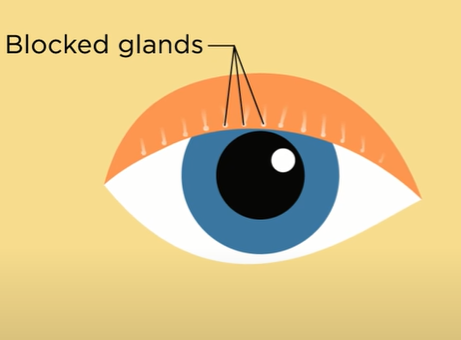
- Swelling of one area in one eyelid is common and is usually caused by a blocked oil gland (chalazion) or a bacterial infection of a lash follicle (stye or hordeolum); upper eyelid swelling in these cases may appear as a red, painful bump.
Less common causes of eyelid swelling include:
- Disorders that cause general body swelling, especially a type of kidney disease called nephrotic syndrome
- A bacterial infection of the skin of the eyelids and around the eyes (preseptal or periorbital cellulitis)
- Chronic inflammation of the eyelid margins (blepharitis), which may locally cause upper eyelid swelling
- Underactivity of the thyroid gland (hypothyroidism)
Overactivity of the thyroid gland (hyperthyroidism)
Overactivity of the thyroid gland may cause bulging eyeballs but does not cause swollen eyelids.
Rare but dangerous causes of eyelid swelling are an infection of the soft tissues in and around and behind the eye socket (orbital cellulitis) and a blockage of a vein at the base of the brain by an infected blood clot (cavernous sinus thrombosis).
Warning signs in the context of upper eyelid swelling
In people with eyelid swelling, certain symptoms and features are a reason for prompt referral to a doctor. They include:
- Fever
- Discharge from the eye
- Loss of vision
- Double vision or changes in the visual field
- Abnormal protrusion of one or both eyes (proptosis)
People with warning signs should see a doctor immediately. If pain is felt and the swelling does not pass, we will usually want to see a doctor within a day or two.
How will the doctor diagnose the cause of the swelling?
Doctors first ask questions about the person's symptoms and medical history. A physical examination is then performed. The findings from the medical history, the account of the symptoms and the physical examination will often hint at a cause for the eyelid swelling and at the tests that may need to be done.
What are the questions the doctors will ask that can point to the source of the problem?
- How long the swelling has existed
- Whether there is swelling in the upper or lower eyelid, in one eye or both
- Whether any injury occurred (including insect bites) or eye surgery
- Whether there is itching, pain, headache, changes in vision, fever or discharge from the eye
- Whether symptoms affecting other areas of the body are also occurring
- Whether the person has disorders (for example, heart, kidney or liver disease) or is taking medications (for example, angiotensin-converting-enzyme inhibitors) known to cause swelling, or has changes in tolerance to cold or heat that may indicate a thyroid disorder
- Whether there have been any changes in over-the-counter products used on the face or around the eye (for example, new makeup, face creams, or new cleansers or new detergents for washing bedding or towels).
In most cases, doctors can determine the cause of the eyelid swelling based on the symptoms and the findings during the physical examination, and no testing is needed. However, if doctors suspect orbital cellulitis or cavernous sinus thrombosis, they immediately perform a computed tomography (CT) or magnetic resonance imaging (MRI). If a heart, liver, kidney or thyroid disorder is suspected, doctors do laboratory tests and sometimes various imaging tests.
The best way to treat eyelid swelling is to treat the disorder causing the swelling.
Have a question about your eyes? Want a specialist opinion?