Most cases of a stye in the eye do not require antibiotic and anti-inflammatory treatment. Even so, in cases of a recurrent stye or other complications, the use of antibiotics can be very helpful.
The use of antibiotics for a stye in the eye
Sometimes the stye may disappear following home treatment, but after a few days it will reappear. This is because home treatment is not able to bring about complete destruction of the bacterial infection but only to slow its spread. In order to avoid a recurrence of a stye in the eye, it is advisable to turn to the ophthalmologist and receive antibiotic treatment. Antibiotic treatment of a stye in the eye can help prevent complications and also prevent the spread of the infection to other organs.
The ophthalmologist can prescribe various antibacterial medications, and for this a clear diagnosis of the problem is required. Different states of a stye in the eye require a different approach and different treatment – so, for example, a person who suffers from a stye in the eye in a chronic form will require different treatment from a person for whom this is a new condition.
Preparations for a stye in the eye
There are diverse forms of antibiotics for local application, such as eye drops and ointments containing antimicrobial ingredients. Thanks to their local mode of action, these medications usually have no effects on further systems in the body such as the digestive system, the liver and the kidneys.
As for eye drops – they are a practical tool which can be used throughout the hours of the day. Usually they do not impair vision after their use. Even so, the use of eye drops of this kind does not constitute a long-term solution. Among the eye drops available on the market can be found:
- Sulfacetamide
- Chloramphenicol
- Tsiprolet
- Floxal
- Sofradex
- Erythromycin
- Tobrex
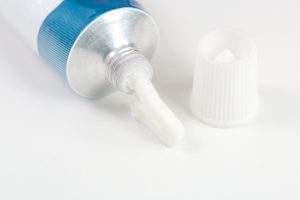
Compared with eye drops, ointments with antibiotics used as an ointment against a stye in the eye are considered more attractive. This is because they act on a wider area compared with eye drops and are able to fight infections outside the eye for a long time. Nevertheless, their use is not very common during the hours of the day since they can cause slight blurring of vision when applied to the eye. Several types of ointment for a stye in the eye from different families can be found, some of which, as noted, are also available in drop form:
- Tetracycline
- Erythromycin
- Floxal
- Tobrex
- Eubetal
Beyond these two forms, there are also treatments given in the form of pills or an injection. If treatment of this kind is indeed required, the treating doctor decides on the dosage of the pills and injections on the basis of the condition of the patient and of the stye in the eye. With considerations such as a wide area of the disease, a recurrent stye or other complications, the option of giving antibiotics systemically will be considered. That is, it is very important to consult a specialist doctor with regard to taking a systemic antibiotic medication in order to avoid symptoms of an overdose and various harms.
Correct use and rules for treatment
Almost all antibiotic treatments are characterised by their ability to stop important processes in the multiplication of bacteria and thus bring about their elimination. Even so, it must be checked that the medication being taken does not have interactions with other medications – this in order to succeed in reaching the full effect of the ointment against a stye in the eye.
Likewise, one must pay attention to and be aware of the side effects of the various treatments and also of the contraindications to their use (such as certain diseases, pregnancy, breastfeeding, sensitivities and so on). Possible side effects of the use of drops for a stye in the eye or of an ointment for a stye in the eye are burning in the eye, pain in the eye, itching, irritation, watering, headaches, dizziness and blurred vision. Moreover, medications given in systemic form have further and more extensive side effects compared with the local treatments of drops and ointments.
When should you turn to the doctor?
During antibiotic treatment, you should turn to the treating doctor if:
- You experience problems with vision
- The swelling in the eyelid increases and no improvement in the condition is seen
- The swelling of the stye is very painful
- You notice scaling and dryness around the eyelid
- Sensitivity to light, profuse watering or redness in the eye develops
Summary
Treatment of a stye in the eye comes in various forms: from home treatments and grandmother's remedies for a stye in the eye, through drops and ointment against a stye in the eye and up to systemic treatments. In certain cases of a stye in the eye the use of an antibiotic preparation should be considered together with the treating doctor. Accordingly and without exception, antibiotic treatments should be used only in accordance with their purpose – so that they should not be used for the treatment of skin diseases, for example, for fear of a mismatch between the concentration of the medication, the active substances in it or its local side effects and the medical condition in question.
The choice of an antibiotic for the treatment of a stye in the eye should always be made together with the treating doctor, because only he can properly diagnose the state of the stye and prescribe the appropriate treatment. Accordingly, it should be noted that even if the stye in the eye appears to be passing, the whole course of treatment and use of the antibiotic defined by the doctor must be completed in order to prevent a state of recurrent infection.
Have a question about your eyes? Want a specialist opinion?