Is keratoconus in only one eye possible?
Keratoconus is an asymmetric disease that involves both eyes. That is, in principle, if keratoconus is discovered in one eye, the disease exists in the second eye as well, and if it has not yet developed, it may develop in the future. In most cases there is one eye with more advanced keratoconus than the second eye. Many patients come for treatment or examination by a doctor when there is a noticeable decline in vision in one of the eyes, and at this stage it is already possible to see initial signs in the second eye as well.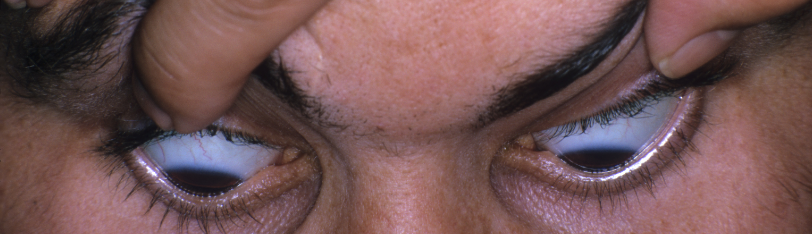
The role of corneal mapping in identifying keratoconus in one eye
Corneal mapping is an excellent diagnostic tool for the early identification of keratoconus. Therefore, when coming to a cornea specialist for examination, mapping of both eyes is performed, and then it is possible to check whether keratoconus indeed exists in only one eye or whether there are signs of keratoconus in the second eye. Corneal mapping provides a high-resolution picture of the corneal curvature, corneal thickness and posterior and anterior elevation. All of these allow a more accurate diagnosis and help the doctor determine the correct treatment.
Why did only one eye develop significant keratoconus and the other did not?
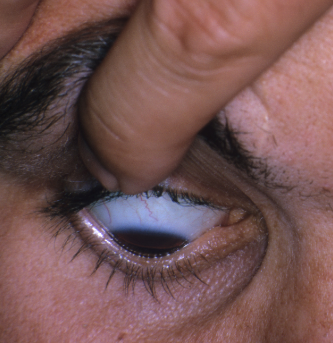
It is possible that the patient rubs one eye more than the other eye. It may also be related to sleep habits such as sleeping on a certain side. There are also additional factors that we do not yet know how to point to that can contribute to more advanced keratoconus in one eye than in the other.
What can be done to prevent the development of asymmetric keratoconus?
- Avoid rubbing the eyes
- Identify sleep habits and consider sleeping with a plastic shield
- If keratoconus is progressing, it is advisable to consider corneal crosslinking
If I have keratoconus in one of my eyes, do I need to do corneal crosslinking in both?
This depends on several factors. If there are several risk factors, then it is customary to perform crosslinking treatment in both eyes, including the eye that appears more normal. Risk factors include: younger age, advanced keratoconus in the second eye, active eye rubbing, active allergy and family history. If the patient has risk factors, it is warmly recommended to treat both eyes and not only the more advanced eye. Close monitoring of the "normal" eye can be considered if there are many hesitations or one is unsure whether to perform treatment in both eyes.
Have a question about your eyes? Want a specialist opinion?