Cataract is a very common condition and usually appears gradually, in older age, although there are additional causes for the appearance of cataract such as increased exposure to radiation, trauma or various diseases.
In intraocular lens implantation surgery, an intraocular lens is used. An intraocular lens (IOL – intraocular lens) is a tiny artificial lens that replaces the eye's natural lens, which is removed during cataract surgery. Similar to the natural lens, the lens's role is to focus the light rays on a specific point in the eye.
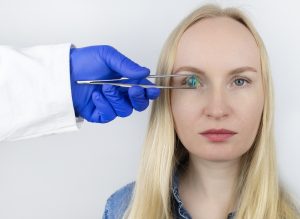
In order to properly fulfill its role and allow the light rays to penetrate, the lens implanted in intraocular lens implantation surgery needs to be transparent. In cataract the lens becomes cloudy and hazy, and as a result the patient may complain of blurred vision, halos that worsen at night or faded color vision.
In cataract surgery the cloudy lens is removed and in its place a new, clear lens is positioned. The artificial lenses have different focusing powers, similar to the lenses of glasses and contact lenses that are personally fitted to each patient. Therefore, before cataract surgery there is a need to perform measurements that will enable the optimal result at the end of the intraocular lens implantation surgery, and may even eliminate the patient's need for glasses (but not always). The measurements include the length of the eye, the concavity of the cornea (the transparent dome over the eye's surface) and the position of the lens within the eye.
During the surgery the eye's natural lens is removed by a device called phaco, which breaks up and suctions out the lens remnants and thereby enables the removal of the lens through tiny incisions at the edges of the cornea. Afterwards the artificial lens is folded and inserted, also through a small incision, and positioned within the capsule in which the original lens sat.
What is the intraocular lens made of?
Most lenses are made of silicone, acrylic or various compounds of plastic. The lenses are coated with a special material that helps protect the eye from the sun's harmful UV rays.
What types of lenses exist?
IOLs can correct a variety of eye conditions, the common ones among them including myopia, hyperopia and astigmatism. Depending on the condition from which the patient who is a candidate for cataract surgery suffers, the most suitable lens for them will be chosen, also taking into account their personal needs. The different lenses include:
- Monofocal lens (Monofocal IOL) – the classic and most common lens. Unlike the eye's natural lens, which can stretch or round according to the eye's needs to focus (to see near or far), the artificial monofocal lens is focused at a fixed distance. According to the specific patient's needs the lens will be fitted for good near or far vision, and the rest of the time the patient may need eyeglasses in order to see optimally.
- Multifocal lens (Multifocal implant) – similar to bifocal eyeglasses, this lens has areas that help see objects at different distances. It may take time until the brain gets used to the fact that the situation is different from the natural vision we are used to. In addition, patients suffer more from halos or a smearing sensation of lights when a multifocal lens is implanted.
- Toric lens (Toric IOL) – a lens suited to patients who suffer from astigmatism. Astigmatism is created when the cornea is not round and symmetrical as it should be. This condition usually affects vision at all distances. If patients do not suffer from myopia or hyperopia in addition to astigmatism, they may not need eyeglasses after the surgery and the entire correction will be done through the intraocular lens.
For how long is the intraocular lens implanted?
IOLs are made of materials that do not break or degrade, so they are suited to remain in the eye for life, without a need for replacement usually. It is important to note that an artificial lens cannot itself undergo a cataract process, since it is not made of the proteins responsible for that. Another condition that can appear after intraocular lens implantation is PCO or secondary cataract – the formation of a layer of cells on the back part of the capsule enveloping the lens. This is not a cataract and the condition can be resolved easily by YAG laser, a fast and painless process done in the clinic.
Is there a risk in intraocular lenses?
Every procedure carries within it dangers and side effects, and so too cataract surgery and IOL implantation. Serious complications after cataract surgery are uncommon and usually treatable. Before the procedure the operating physician is expected to ask you about medical history, ocular history and regular drug treatment in order to determine whether you are a good candidate for surgery and what the level of risk is for you. That is, as with all surgeries, in intraocular lens implantation too a professional opinion is a necessary thing. One should consult a specialist ophthalmologist regarding suitability for surgery.
It is important to know that in most cases the surgery is done under local anesthesia only. If so, although in intraocular lens implantation risks do exist, the local anesthesia significantly reduces the risks in it. After the procedure the physician will instruct how to conduct oneself in the coming period and which eye drops should be used. It is important to adhere to the treatment in order to prevent complications such as infection or a severe inflammatory condition, which pose a danger to the eye's health.
Cost of intraocular lens implantation
Intraocular lens implantation price – intraocular lens implantation surgery may be expensive due to the personal preparation of the lens to match the existing lens structure of the patient.
Health funds and members:
- Intraocular lens implantation Clalit
- Intraocular lens implantation Maccabi
- Intraocular lens implantation Meuhedet
- Intraocular lens implantation Leumit
The starting cost at the health funds is around 6,000 ₪, but it is important to note that private insurance and memberships in the health funds usually cover the cost within the treatments they offer. That is, intraocular lens implantation at Maccabi or intraocular lens implantation at Clalit will be priced differently. One should check with the health fund of which the patient is a member what the extent of the fund's participation is before making the decision to undergo the surgery.
Please note:The fund's participation applies when the surgery is performed by a surgeon who is under arrangement with it. Prof. Mimouni is not under arrangement with Maccabi or with Clalit, and their supplemental insurance plans do not reimburse payment for a private surgery with him. The list of funds and insurance companies with which an arrangement does exist can be found on the Contact page.
Expressions on this subject that you may have searched for:
Intraocular lens implantation price,
Intraocular lens implantation opinion,
Intraocular lens implantation Clalit,
Intraocular lens implantation Maccabi,
Intraocular lens implantation surgery,
Intraocular lens implantation risks,
Have a question about your eyes? Want a specialist opinion?