A membrane in the eye, or a white membrane in the eye (pterygium), is a condition in which fibrovascular blood-vessel tissue grows on the surface of the eye and covers the cornea. The membrane can be white in the eye and cause burning, irritation, profuse tearing and even affect quality of life and vision. To treat the membrane, tear substitutes and anti-inflammatory treatments can be used, and in advanced cases it can be removed in a simple operation.
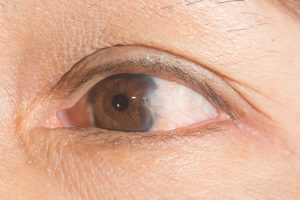
A pterygium is a membrane in the eye, white or reddish in colour, which covers the cornea of the eye. It is a non-malignant condition, but it can cause redness in the eye, irritation and even disturbances of vision. If needed, the pterygium and the membrane in the eye that has grown can be removed in a simple and effective operation.
What is a pterygium (a membrane in the eye)?
As noted, a pterygium describes a condition of a benign growth of fibrovascular tissue on the surface of the eye. This is fleshy tissue containing blood vessels, growing from the edge of the eyelid close to the nose and gradually covering the cornea – it therefore looks like a white membrane in the eye or a membrane of a white-reddish colour. A pterygium can grow in one eye or in both, can be primary or recurrent after surgery, and in rare cases can grow from both directions of the eye.
What are the causes of the development of a pterygium (a white membrane in the eye)?
The causes of the appearance of a pterygium or a membrane on the eye are not absolutely known. Even so, there is a connection between the appearance of a pterygium and prolonged exposure to sunlight and even to smoking. Accordingly, there is a recommendation for people who work outdoors to wear sunglasses that include protection against UV radiation, in order to prevent the growth of a pterygium.
Likewise, it has been found that chronic inflammations in the eye and conditions of dryness in the eye may also cause chronic changes in the eye tissue and thus the development of a pterygium. Therefore, people living in a dry climate or people suffering from dry eyes should use artificial tears and other eye drops in order to keep the eye moist or to treat the chronic inflammation according to the ophthalmologist's recommendation.
What are the signs of a pterygium (a membrane in the eye)?
A pterygium can affect quality of life to a wide extent, depending on its size. In most cases, a pterygium mainly causes an appearance of redness in the eye, a sensation of irritation or burning in the eye, profuse tearing and sometimes a sensation of dryness or of a foreign body in the eye.
What are the complications of a pterygium?
Beyond the obvious disturbances of a pterygium, in advanced conditions in which it is not treated in time, it may cause a reduction in the quality and acuity of vision. That is, the growth of the membrane in the eye will cause disturbances of vision because of its extensive growth up to the stage at which it covers the visual axis of the eye.
A further complication of the pterygium is distortion of the cornea. This is because the fibrovascular tissue may pull on the cornea of the eye and change its spatial shape. Thus a situation is created in which the cornea of the eye is not in a normal structure and it is possible that a need will develop to fit glasses with a cylinder.
How can a pterygium be treated?
In conditions in which the pterygium is small and does not cause symptoms, one should be under monitoring at an ophthalmologist. That is, when the pterygium does not interfere with vision or quality of life to a noticeable extent, the symptoms can, as noted, be treated by various kinds of eye drops. When the pterygium causes significant disturbance, it is recommended to remove it by surgery. Surgery to remove a pterygium is considered a relatively simple operation, usually done under local anaesthesia and lasting a short time. The surgery is carried out on the surface of the eye and is not especially invasive.
Summary
A pterygium or a membrane in the eye is blood-vessel tissue that causes a disturbance in vision and in quality of life, which is expressed in sensations of irritation and discomfort in the eye, changes in the quality of vision and in the appearance of the eye. In accordance with the stage it is at, the treatment of a pterygium includes tear substitutes, anti-inflammatory treatments and even operations in which it can be removed.
Have a question about your eyes? Want a specialist opinion?