Demodex
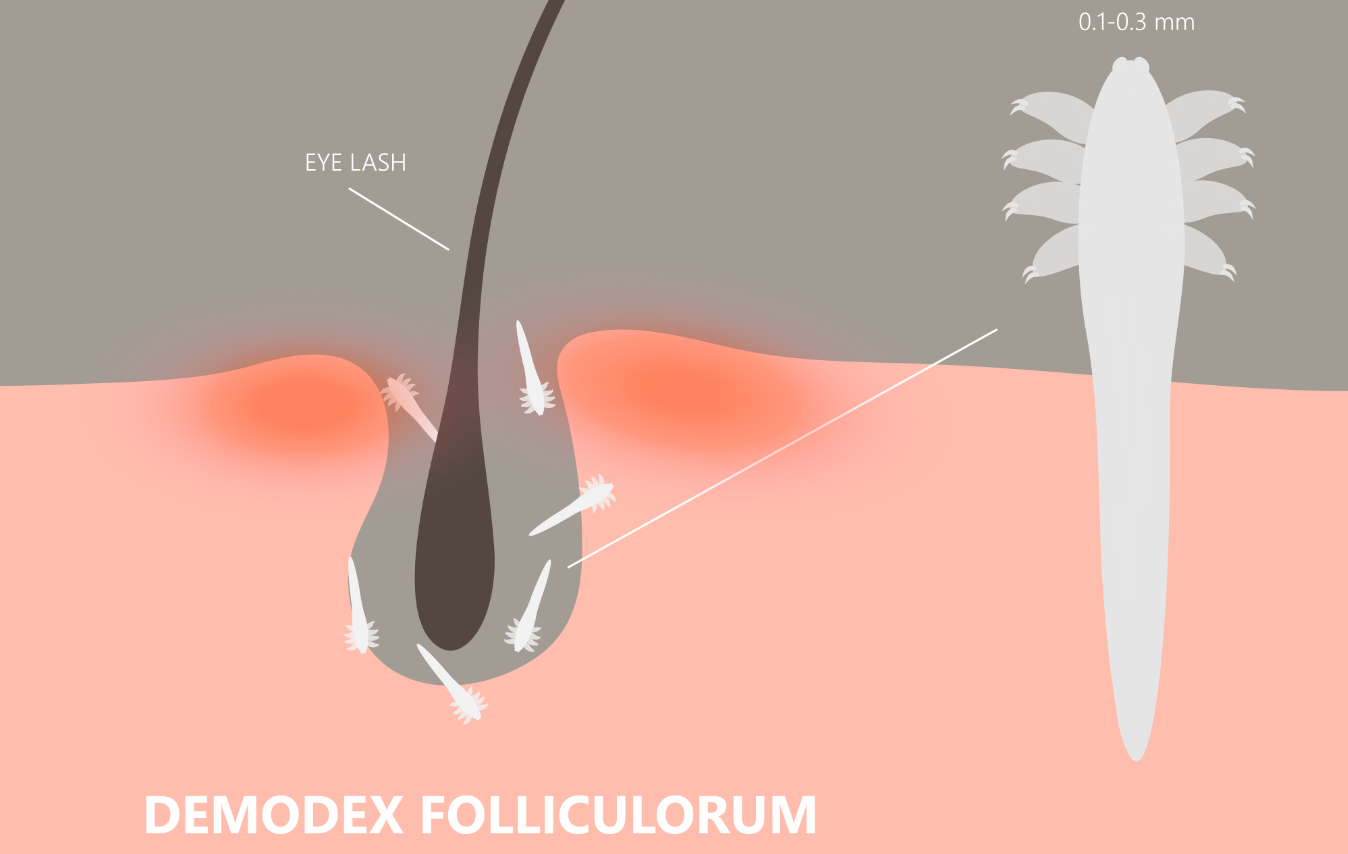
Demodex is a parasite, a mite, that lives on our face and hair follicles. It can cause various complications on the facial skin and eyes, such as blepharitis, acne and more. Demodex can appear at any age, but studies show that the spread of demodex increases with age and has been observed in over 80% of the adult population over the age of 60. There are two known types of demodex mite, both microscopic and feeding on dead skin cells. The longer type, Demodex folliculorum, is the type more likely to affect the eyelashes since it feeds on the dead skin cells around the lashes and eyelids. The other type is shorter, Demodex brevis, which lives in the oil glands of the skin. The disease can severely damage the skin, especially when the immune system is weakened and the parasite population thrives, and it may also worsen other skin conditions. Most people have tiny amounts of these mites and they can spread between people and animals through close contact, but as noted, in a normal immune state and in amounts that are not large they are usually insignificant. If you are experiencing symptoms and signs that may indicate a mite outbreak in the eye area, you should consult an ophthalmologist for diagnosis and treatment of the condition.
Symptoms of demodex mite on the eyelashes
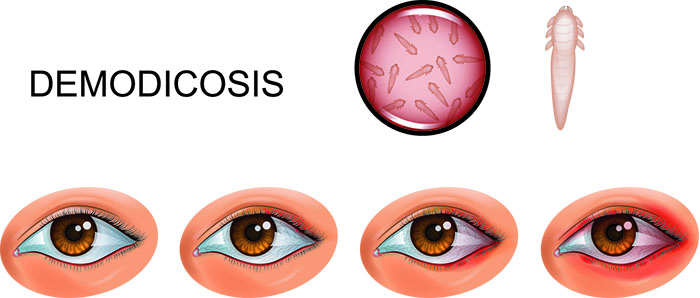
Symptoms of demodex mite on the eyelashes may include an itching sensation of the skin around the lashes, flaking, rough patches on the skin, redness around the eyes, a burning sensation in the eyes, worsening of existing skin symptoms or flare-ups such as rosacea and eczema (dermatitis). In advanced stages, demodex may cause inflammation (blepharitis), which manifests in other symptoms such as brittle lashes, sticky eyes, frequent blinking and over time even impaired lash growth.
How do you get demodex on the face?
The mites are transmitted between hosts by contact of hair and sebaceous glands, and their spread can also be due to shared use of makeup such as mascara, eyelash brushes and other cosmetic products used for the eye and lash area. In most cases the mites pass without any intervention and without symptoms. However, in certain cases the mite population migrates and multiplies in the lashes. Mites are studied in the context of rosacea: they appear in larger amounts in the presence of this skin disease, and are likely involved in causing the disease. Other potential factors for a lash mite outbreak include other skin diseases such as dermatitis, inflammatory acne, hair loss, various skin conditions and a weakened immune system, which can be caused by diseases such as HIV, congenital diseases or as a result of drug treatment that suppresses the immune system.
Treatment of demodex
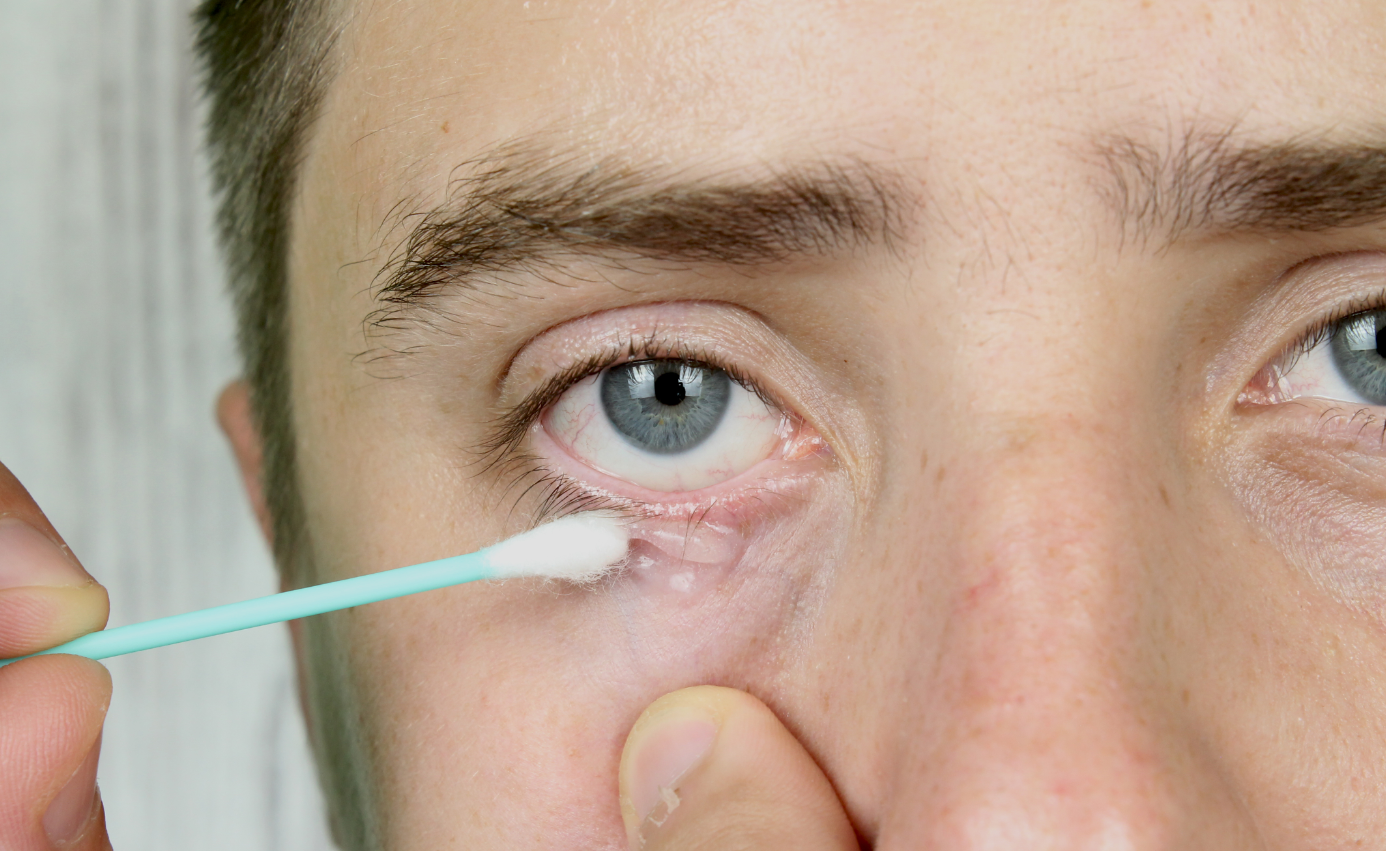
Before starting treatment, a diagnosis must be obtained through a simple biopsy in which the lashes are lightly scraped to collect a sample of the oil, tissue and even mite particles. After collection, the sample is examined under a microscope, since the mites cannot be seen with the naked eye. Alongside treating the parasite itself, it is important to treat the accompanying underlying skin diseases. Tea tree oil may be an additional treatment option for treating demodex mite in the lash area. Also, when demodex is diagnosed it is important to wash the face, nostrils, outer ear and neck daily with soap. Bedding and pillows should be washed in hot water and dried in a heated dryer immediately upon starting parasite treatment, and the actions repeated at least once a week. Pets should also be kept away from the sleeping surface, and if other family members suffer from symptoms that may indicate the presence of demodex on them too, they should be examined by an ophthalmologist and treated accordingly.
There are several possible treatments for demodex. The first is the use of tea tree oil-based products such as wipes or lash shampoo enriched with tea tree oil. This requires daily treatment for several weeks to months in order to reduce the amount of demodex on the lashes. It is also possible to use anti-parasite ointments such as ivermectin and apply it to the edge of the eyelids and the facial area. You can also talk to your doctor about oral treatment (in pills) against demodex. There are today more advanced treatments to reduce the demodex load using microexfoliation with special brushes such as BlephEx or MiBo Pro. It is also possible to do a series of IPL (Intense Pulsed Light) treatments in order to treat both the demodex and the secondary blepharitis it causes.
How can demodex be prevented?
General health, hygiene and proper eye care can help avoid lash mites in the first place. There are several methods that will help with this: avoiding the use of shared cosmetics and makeup or expired makeup, using non-oily makeup and cosmetics, washing the face twice a day and gently cleaning the eye area, using lash wipes daily, especially if wearing makeup or suffering from excess secretions or oil. If there is no improvement despite the treatments mentioned, you should consult the treating physician for further evaluation. In severe cases such as demodex among the immunocompromised such as those with HIV, oral rather than only topical treatment may be required to deal with the parasite. Eradication of the mite is not immediate because of its life cycle, which lasts several weeks, and therefore requires close follow-up by the ophthalmologist. In addition, it is advisable to consult a doctor if underlying diseases such as eczema or rosacea worsen, since as noted there is a connection between the conditions. When the eye mite is not treated it may damage the eye and vision and lead to dry eye and impaired quality of life.
Have a question about your eyes? Want a specialist opinion?