A secondary cataract appears in about a third of patients who have undergone cataract surgery, and this is one of the reasons that follow-up after cataract surgery is so important.
What Is a Secondary Cataract and How Does It Affect Vision?
A secondary cataract, also known as an “after-cataract” or “secondary cataract,” is a condition in which a cataract develops after primary cataract surgery. Usually, during cataract surgery, the original cataract can be removed and a replacement lens implanted in its place. However, development of a secondary cataract is often observed due to thickening of the tissue remaining around the implanted lens. This thickening can lead to the appearance of a new cataract that causes a decline in visual acuity and symptoms similar to those of a primary cataract.
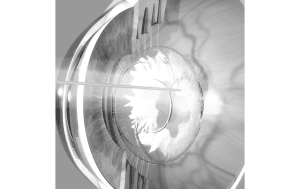
Symptoms of a secondary cataract can include: blurred vision, sensitivity to light, problems with night vision, and a sense of difficulty distinguishing between colors. Patients may also complain of a sensation of a “halo” or “glare” around light sources. The effect of a secondary cataract on vision can be significant and sometimes makes daily activities such as reading, driving, and working at a computer difficult.
Causes of a Secondary Cataract and Which Medical Conditions Contribute to It
The causes of a secondary cataract can be varied, and depend on a range of medical and personal factors. One of the main causes is thickening of the lens capsule, the tissue adjacent to the implanted lens, which is part of an imperfect healing process. Another cause is chronic inflammation in the eye after cataract surgery, which can lead to abnormal growth of cells on the surface of the capsule.
Additional medical conditions that can contribute to the development of a secondary cataract include diabetes, in which there is a high tendency toward the development of eye complications including cataract. Trauma or injuries to the eye, even if they occur a long time after surgery, can accelerate the process. Chronic eye inflammations, as well as certain substances or medications, can also contribute to the development of a secondary cataract.
In general, the development of a secondary cataract can be the result of a combination of genetic, environmental, and medical factors, and their effect depends on the overall health condition of the patient and the quality of the care the eye received after the primary surgery.
Symptoms and Diagnosis of a Secondary Cataract: How to Identify the Problem?
A secondary cataract is characterized by symptoms similar to those of a primary cataract, but with slightly different clinical distinctions. The common symptoms include blurred vision, which occurs slowly and gradually, as well as experiences of glare or a halo around light sources, especially at night. Patients may report a decline in visual acuity that leads to difficulties in daily activities such as reading or driving.
During the visit to the physician, thorough eye examinations will be performed. The physician will assess visual acuity using a visual acuity test, and will perform additional examinations such as a corneal examination, intraocular pressure, and the condition of the surrounding tissues. In addition, imaging tests such as ultrasonography or imaging with a contrast agent may be required to assess the condition of the capsule adjacent to the implanted lens. All of these help assess the extent of the spread of the secondary cataract and guide the appropriate treatment.
Treatment of a Secondary Cataract: Recommended Approaches and Techniques
Treatment of a secondary cataract focuses mainly on improving vision and reducing symptoms through medical intervention. The most common treatment is a small, common procedure called “YAG capsulotomy” or “YAG laser capsulotomy.” During this procedure, a laser is used to remove the enlarged and clouded part of the capsule surrounding the implanted lens. The procedure is performed without cutting or great risk, and usually does not require a long recovery time.
Depending on the condition and the physician's instructions, additional treatment may be required to improve the results or manage accompanying symptoms. In certain cases, if the secondary cataract does not respond well to laser treatment or if there are additional complications, further intervention or complementary surgery may be required. Additional treatments can include fitting new glasses or contact lenses if further improvement in visual acuity is needed after the procedure.
Among patients with a special medical background or additional medical conditions, personalized treatment that includes combined approaches may be needed to ensure the best result. It is important to follow the physician's instructions and undergo periodic check-ups to ensure that vision is maintained at high quality after treatment.
Outcomes and Prognosis for Treatment of a Secondary Cataract: What to Expect?
Treatment of a secondary cataract usually brings a significant improvement in visual acuity and at least an improvement in the symptoms that existed before treatment. The common procedure of YAG capsulotomy, in which the thickening of the capsule is removed using a laser, is relatively simple and usually brings positive results. Most patients reported a quick improvement in vision after the procedure, and the sensation of glare and blurring disappears almost immediately.
However, a need may arise for additional treatments or further adaptations, such as fitting new glasses. It should be noted that certain cases may occur in which an additional secondary cataract develops or the symptoms do not disappear completely, so it is important to continue periodic examinations and monitor the state of vision. The long-term prognosis is usually good, especially if early and precise treatment is performed.
Important Terms About Secondary Cataract: Explanations and Glossary
Secondary cataract
A condition in which a new cataract develops after primary cataract surgery, usually as a result of thickening of the capsule surrounding the implanted lens.
YAG capsulotomy
A procedure performed using a laser to remove the thickening of the capsule surrounding the implanted lens. The procedure is intended to improve vision and reduce the symptoms of a secondary cataract.
Capsule
The tissue that surrounds the natural lens of the eye, and in the case of a secondary cataract, it thickens and causes a decline in visual acuity.
Visual acuity
The ability to see details clearly, which is tested using various tests at an ophthalmologist.
Blurred vision
A condition in which the image seen by the eye is not sharp and clear, and may be caused by a cataract or other conditions in the eye.
Glare
A sensation of loss of the ability to distinguish details around strong light sources, a symptom that can also occur in the case of a secondary cataract.
Laser
A medical technology that uses focused light to perform precise cuts or treatments, such as YAG laser capsulotomy.
Eye
The organ responsible for receiving the image from the environment and turning it into neural signals sent to the brain, and considered a central part of the visual system.
Summary of Secondary Cataract: Key Points and Recommendations
A secondary cataract is a condition in which an additional cataract develops after primary cataract surgery, as a result of thickening of the tissue around the implanted lens. Symptoms include blurred vision, glare around light sources, and a decline in visual acuity, which may interfere with daily activities such as reading and driving.
Treatment of a secondary cataract is carried out mainly using YAG capsulotomy, a simple and effective procedure that removes the thickening with the help of a laser. The results are usually positive and bring a quick improvement in vision, but it is important to monitor the state of the eye and be prepared for additional treatments if necessary. It is worth keeping to periodic eye examinations to prevent complications or further development of a secondary cataract.
Have a question about your eyes? Want a specialist opinion?