An important health decision
Refractive surgeons have numerous means to allow their patients to fulfill their dreams. The real challenge is to choose the right treatment for the right patient and reach the desired result. For the surgeon and for the patient it is important to have the best paramedical team in order to allow the surgeon to collect all the information about the patient's motivation, the clinical findings in his examination and data from the auxiliary instruments.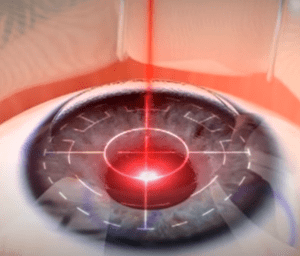 The surgeon's team usually meets the patient first, therefore, it is important that they be able to receive basic information from the patient such as relevant personal background, medical background, the reason the patient is looking for glasses-removal surgery, and also know how to assess the patient's personality in general. Passing this information to the surgeon makes it possible to create a good starting point and a correct approach to the patient.
Suitability test for laser surgery – learn more (click here)
Aligning expectations
It is very important that there be an alignment of expectations between the patient and the surgeon. There are patients with unattainable expectations, and it is advisable to explain very clearly to those patients what is really expected for them after the surgery. The surgeon must make sure that the patient understands the basic steps of the surgery and what is expected for the patient after the surgery in terms of recovery (of course depending on the type of surgery). It is also important to clarify to the patient about possible side effects such as halos and dryness that may occur after the surgery, and in addition about the possible complications such as complications related to the LASIK flap, the possibility of repeat surgeries and the possible need for reading glasses (especially over age 40 or people who already suffer from presbyopia). Again, it is essential to emphasize the importance of aligning expectations between the surgeon and the patient.
Laser glasses removal – learn more (click here)
Auxiliary tests
One can make use of images of the patient's auxiliary tests in order to explain to him about the findings in his examination. For example, presenting to the patient his topography/tomography images can help demonstrate the normality of the cornea or abnormal findings in their cornea. Demonstrating these images can also help to reassure the patients and their concerns. Instructional videos about the surgeries before they enter the doctor's examination can also be very effective.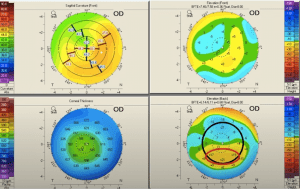
Considerations in choosing a surgery for a patient
When considering which surgery is most suitable for the patient there are several parameters that need to be taken into account. Among others, the following parameters need to be taken into account: age, sphere value, cylinder value, corneal thickness/pachymetry, residual corneal thickness (residual stromal bed), findings in topography/tomography, keratometry, lens opacities, pupil size and more. In order to prevent risks for laser glasses-removal surgery it is right to choose the most suitable surgery for each patient.
Laser glasses-removal clinics – learn more (click here)
Have a question about your eyes? Want a specialist opinion?