What to Expect After Pterygium Surgery?
In order to understand what to expect in terms of pterygium surgery recovery, one must first understand what the surgery involves. Pterygium surgery is a procedure performed to remove non-cancerous conjunctival growths (pterygia) from the eye. The conjunctiva is the transparent tissue that covers the white part of the eye and the inner part of the eyelids. Some cases of pterygium produce little to no symptoms. Severe overgrowth of the conjunctival tissue can cover the cornea and interfere with vision.
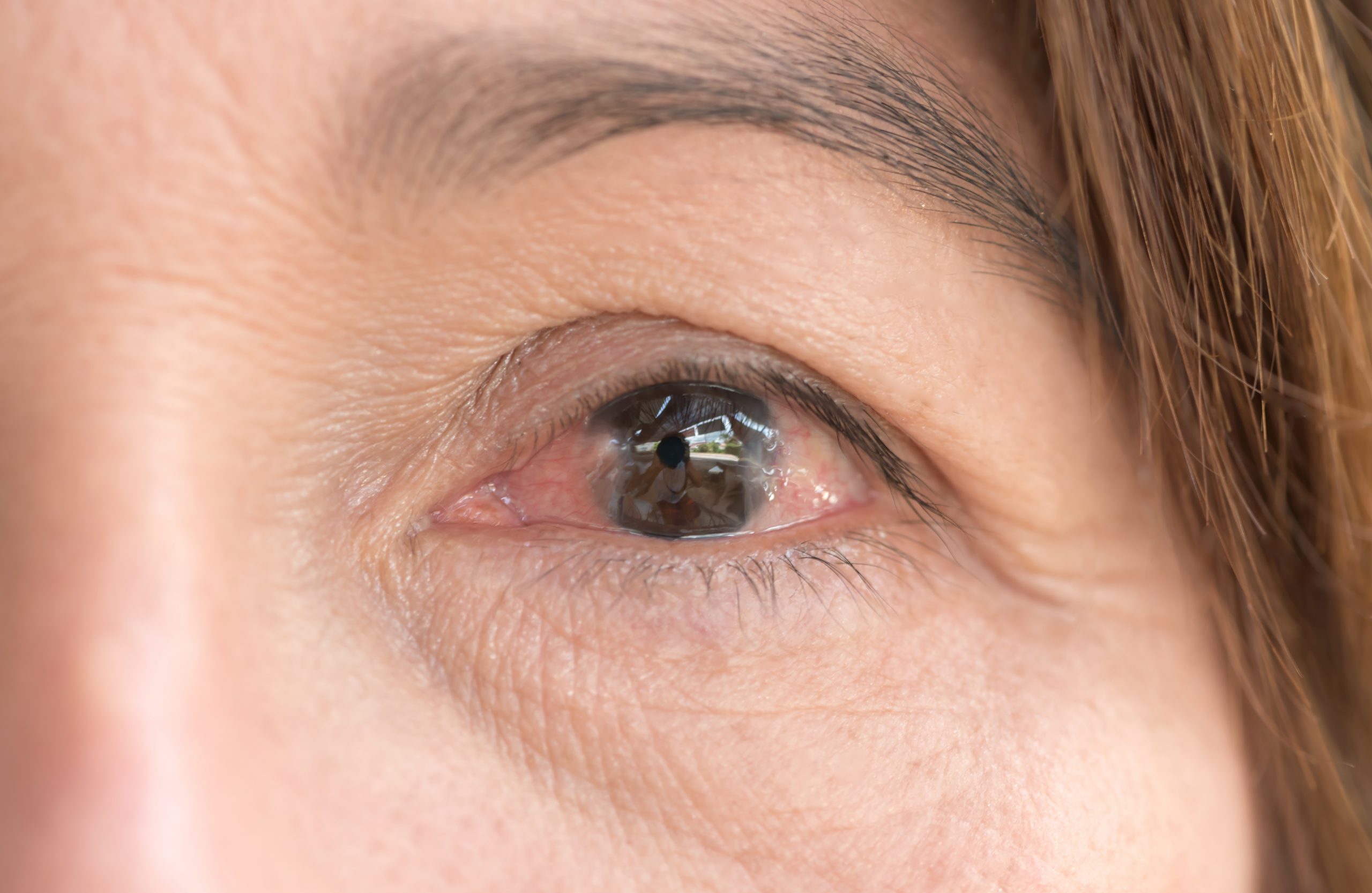
What to Expect During Pterygium Surgery?
The surgical procedure for a pterygium is fairly quick and low-risk. Your eyes will be covered to prevent discomfort during the surgery. A thorough cleaning of the area around the eye will then be performed. Removal of the pterygium will be carried out together with associated conjunctival tissue. After removing the pterygium, we will replace it with a graft of conjunctival tissue from a healthy area of the eye in order to prevent recurrent pterygium growths.
Pterygium Surgery Recovery: Glue vs. Sutures
After removing the pterygium, sutures or fibrin glue can be used to attach the conjunctival tissue graft in place. Both techniques reduce the possibility of recurrence after surgery. While the use of dissolvable sutures may be considered quite accepted today, it may cause more discomfort after surgery and extend the recovery time to several weeks. The use of fibrin glue, on the other hand, has been shown to reduce inflammation and discomfort while shortening the recovery time by half (compared to the use of sutures). However, since fibrin glue is a blood-derived product, it may carry a risk of transmitting infections and viral diseases. Therefore, commercial companies use many mechanisms to produce a safe commercial fibrin glue for the surgery. As a result, the use of fibrin glue can also be more expensive than the use of sutures.
Pterygium Surgery Recovery With the Bare Sclera Technique
Another option, although it carries an increased risk of pterygium recurrence, is the bare sclera technique. In this traditional (and outdated) procedure, the physician removes the pterygium tissue without replacing it with a tissue graft. This leaves the underlying white of the eye exposed to heal on its own. While the bare sclera technique eliminates risks from sutures or fibrin glue, there is a high incidence of pterygium regrowth, and at a larger size. There is also an increased risk of melting of the white of the eye if the bare sclera technique is combined with the use of Mitomycin C. Therefore, it is best to avoid this method.
Pterygium Surgery Recovery and Rehabilitation
At the end of the surgery, we will place a therapeutic contact lens and then bandage the eye in order to encourage comfort and faster recovery. It is important not to rub the eyes after surgery in order to prevent dislodging of the conjunctival graft from its place. After surgery, you will receive an explanation of the post-surgery care instructions, including cleaning, the use of antibiotics, steroids, and follow-up visits.
What Is the Recovery Time After Pterygium Surgery?
The recovery time can take between a few weeks and two months until the eye heals completely, with no signs of redness or discomfort. However, this may also depend on the type of technique used during the surgery.
Complications After Pterygium Surgery
As with any surgical procedure, there are risks. After pterygium surgery, it is normal to experience discomfort and redness. It is also common to notice some blurring during recovery. However, if you begin to experience vision difficulties, complete loss of vision, or notice regrowth of the pterygium, you should see an ophthalmologist for examination.
Have a question about your eyes? Want a specialist opinion?