The lacrimal system is composed of several components:
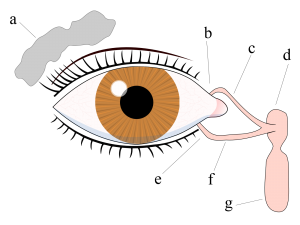
- The lacrimal gland (central)
- Accessory glands (the accessory lacrimal glands)
- The lacrimal excretory system
Impairment of the integrity of the lacrimal system can lead to a wide variety of ocular symptoms and diseases. It is the role of the ophthalmologist to identify the impaired component and treat it. Surgical procedures intended to correct defects in the lacrimal system belong to the field of oculoplastics.
Lacrimal gland
The central lacrimal gland is located within a recess in the orbital segment of the frontal bone. Fatty tissue separates the gland from the bone. It is composed of two different parts:
- Orbital lobe – the main part of the central lacrimal gland. When it is necessary to perform a biopsy of the lacrimal gland, it is usually performed in the orbital lobe.
- Palpebral lobe
The lacrimal gland receives its blood supply from a branch of the ophthalmic artery called the lacrimal artery.
The innervation of the lacrimal gland is very complex and consists, among other things, of sympathetic and parasympathetic nerves. These components are responsible for the tear reflex and for psychogenic causes of tearing.
Accessory lacrimal glands
The accessory tear glands named after Krause and Wolfring are located in the fornices of the eye. They provide about a tenth of the total tears that we produce.
Lacrimal excretory system
The lacrimal excretory system includes the following components:
- Upper and lower puncta
- The canaliculi – into which the puncta drain respectively
- In most of us the two canaliculi join into a common channel (common canaliculus)
- The lacrimal sac – into which the canaliculus drains.
- The nasolacrimal duct – which carries the tears into the nasal cavity.
Have a question about your eyes? Want a specialist opinion?