Keratoglobus is a rare, non-inflammatory disorder of the cornea that affects the shape and structure of the cornea, causing it to thin and bulge. This condition can cause significant visual impairment and requires appropriate diagnosis and treatment. Here we will explore the various aspects of keratoglobus, including causes, symptoms, diagnosis, treatment options, potential complications and prevention.
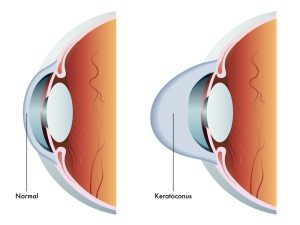
What is keratoglobus?
Keratoglobus is a progressive disorder affecting the cornea, the clear, dome-shaped front part of the eye. Unlike other corneal conditions such as keratoconus, which usually affects young adults, keratoglobus is usually present at birth or develops during childhood. It is characterized by bilateral thinning (affecting both eyes) and symmetrical thinning of the cornea, resulting in a globular, protruding shape.
Causes of keratoglobus:
The exact cause of keratoglobus is still not fully understood. However, the condition is believed to arise primarily from a genetic predisposition, as it tends to run in families. Mutations in certain genes may affect the structure and integrity of the cornea, leading to its abnormal shape. In addition, some cases of keratoglobus have been linked to conditions such as connective tissue disorders, including Ehlers-Danlos syndrome and osteogenesis imperfecta.
Risk factors for keratoglobus:
While the specific risk factors for keratoglobus are unclear, certain factors may increase the likelihood of developing the condition. As noted, a family history of having a relative with keratoglobus or a similar corneal disorder raises the risk. So do genetic factors, since certain gene mutations may contribute to the development of keratoglobus.
Symptoms of keratoglobus:
People with keratoglobus may experience the following symptoms:
- Blurred or distorted vision: visual acuity may be significantly impaired, making it difficult to see objects clearly.
- High astigmatism: astigmatism is a refractive error of the light rays that causes distorted or blurred vision due to an irregularly shaped cornea. Keratoglobus often leads to high levels of astigmatism.
- Increased sensitivity to light: bright lights may cause discomfort or glare for people with keratoglobus.
- Frequent changes in prescription: as the condition progresses, prescriptions for glasses or contact lenses may require frequent adjustments.
Diagnosis of keratoglobus:
In order to diagnose keratoglobus, an ophthalmologist will perform a comprehensive eye examination, which may include the following:
- Visual acuity tests: assessing how well a person can see at different distances.
- Corneal topography: mapping the shape and curvature of the cornea to identify irregularities.
- Slit-lamp examination: examining the cornea under a special microscope to assess its thickness and structural abnormalities.
- Pachymetry: measuring the thickness of the cornea.
Treatments for keratoglobus:
Treatment options for keratoglobus depend on the severity of the condition and the specific needs of the individual. These may include:
- Glasses or contact lenses: initially, glasses or specially designed contact lenses may be prescribed to correct refractive errors and improve visual acuity.
- Corneal cross-linking (CXL): this procedure involves applying special eye drops to the cornea and exposing it to ultraviolet light to strengthen the collagen fibers. CXL can help stabilize the cornea and prevent further bulging.
- Corneal transplant: in advanced cases of keratoglobus where other treatments are ineffective, a corneal transplant may be considered. During this procedure, the damaged cornea is replaced with a healthy donor cornea.
Complications of keratoglobus:
If left untreated, keratoglobus can lead to several complications. Among others, corneal scarring can develop. This is because as the cornea becomes thinner and more irregular, scars may form and impair vision. In addition, corneal hydrops may occur – a condition in which the weakened cornea may develop a sudden accumulation of fluid, leading to acute vision loss and pain.
Prevention:
Since keratoglobus is primarily a genetic condition, there are no specific preventive measures. However, early diagnosis and timely treatment can help manage the condition effectively, preserve vision and minimize complications. Regular eye examinations, especially for people with a family history of keratoglobus or other corneal disorders, are essential for early detection.
Summary:
Keratoglobus is a rare corneal disorder characterized by thinning and bulging of the cornea. While the exact cause is unknown, genetic factors play a significant role. Prompt diagnosis, appropriate treatment and regular follow-up with an ophthalmologist are essential for the effective management of keratoglobus. With advances in treatment options and ongoing research, people with keratoglobus can achieve improved visual acuity and maintain a good quality of life.
Have a question about your eyes? Want a specialist opinion?