Why is there dryness in the upper eyelid?
A dry upper eyelid is a common functional and aesthetic nuisance that occurs as a result of the failure of the upper layer of the skin to hold and retain moisture.
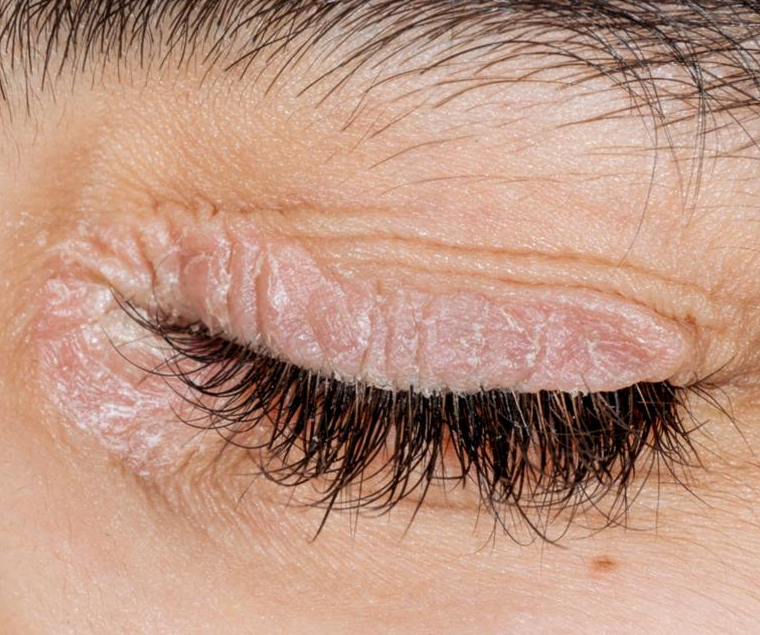
Symptoms of a dry eyelid vary from person to person and can appear at varying levels of severity. Common symptoms:
- Scaly skin
- Skin with a rough texture and cracks
- Itching
- Pain, a stinging or burning sensation
- A wrinkled, drooping appearance
- Peeling of the skin
- Irritated skin
Causes of a dry upper eyelid
There are a variety of common causes of a dry upper eyelid:
- "Atopic dermatitis" or "eczema of the skin": inflammation of the skin, not necessarily on an infectious basis. Eczema of the skin tends to appear as early as childhood and in association with other allergies or asthma. Characteristic signs are thickening of the skin, a rash, bleeding or pus.
- "Contact dermatitis": inflammation that develops from contact with an irritant, for example make-up, soap, cream, dust, chlorine and more. It usually presents with a sensation of itching or burning accompanied by redness of the area that came into contact with the irritant.
- Environmental factors: prolonged stays in air-conditioned places with low humidity levels, or alternatively prolonged exposure to water in a pool or bath.
- Older age: the fat layer is essential for retaining the skin's moisture but naturally diminishes with age; various habits such as smoking may accelerate this process and worsen dryness of the eyelids.
Treatments for a dry upper eyelid
Treatment of a dry upper eyelid depends on the cause. Where the problem is dermatitis (inflammation) on an atopic basis or following contact with an irritant, the immediate short-term solution will be the use of creams and moisturisers, or instilling drops containing steroids to suppress the inflammation. If an infection has become established, the use of an antibiotic ointment or drops will also be recommended, while in the long term it is advisable to try to avoid known irritants.
The American Academy of Dermatology has also published a number of recommendations concerning lifestyle changes that help preserve and restore moisture to the skin of the eyelids:
- Applying creams several times a day and immediately after showering, preferably ones with active ingredients such as shea butter, jojoba oil, glycerin, lactic acid, inulin or urea.
- Avoiding a prolonged shower (longer than 5 minutes)
- Using warm rather than hot water (which encourages dryness)
- Avoiding prolonged stays in the sun
- Using gentle soaps for sensitive skin
- Using a humidifier during prolonged stays in an air-conditioned environment (heating or cooling)
Have a question about your eyes? Want a specialist opinion?