Patients often want to find out what cataract surgery costs. First it helps to understand what a cataract is. A cataract is in fact a clouding of the eye's natural lens. In its healthy state the lens is completely transparent, and so allows light rays to pass through it and reach the back of the eye — the retina. There the light is converted into a signal that the brain processes. When the lens loses its transparency, light is blocked on its way to the retina, until the optic nerve no longer detects any light at all and loss of vision occurs. The situation can be compared to a clear spectacle lens on which more and more dirt accumulates, until nothing can be seen through it.
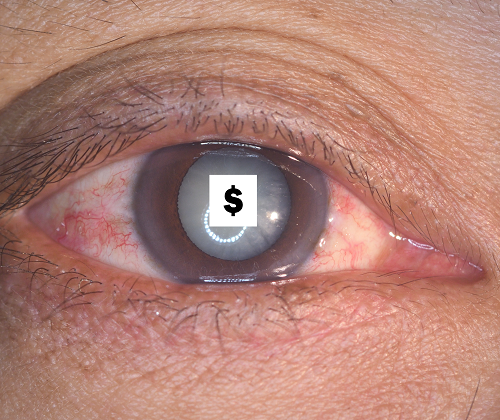 A cataract usually develops around the age of 40–50, but the person will only notice the impairment in vision later, around the age of 60. Because this is a progressive eye disease that gradually worsens over time, if it is left untreated it can lead to complete loss of vision. During cataract surgery the clouded lens is removed and an artificial intraocular lens (IOL) is implanted in its place.
Cataracts are becoming more common from year to year, and the need for cataract surgery is rising accordingly. This reality has driven significant technological progress that offers new, effective treatment options. The wide variety of options available brings with it an equally wide and varied range of prices, depending on the technology used, the skill and experience of the operating surgeon, the severity of the patient's cataract, the type of surgery, the type of intraocular lens implanted, and coverage by the health funds and private insurers. In addition there are costs around the surgery itself, such as pre-operative visits, medication after surgery, and tests before and after the operation.
How much does cataract surgery cost?
In Israel, basic cataract surgery can be performed within the public health basket, but many patients turn to semi-private care (supplementary insurance through their health fund) or private care in order to choose their surgeon, specific lenses (premium multifocal), or the use of advanced technology such as a laser.
Those with supplementary insurance through their health fund (for example Clalit Mushlam, Maccabi Sheli, Meuhedet Si and others) will receive coverage for the basic operation carried out in private medical centres and hospitals, and will be able to choose innovative techniques such as laser and to choose specific lenses — all with an additional co-payment ranging from hundreds to thousands of shekels, depending on the benefits of the fund the patient is insured with.
Please note: this coverage applies when the operation is carried out by a surgeon who is in the fund's network. Prof. Mimouni is not in the Maccabi or Clalit network, and their supplementary plans do not reimburse a private operation with him. The health funds and insurers he does have arrangements with are listed on the contact page.
How much does private cataract surgery cost?
 As noted, you can choose to have the operation privately. The cost of the operation can be broken down into several separate components: a consultation appointment, which usually costs several hundred shekels; the operation itself, whose cost varies greatly from surgeon to surgeon and starts at a few thousand; an additional charge if you want the operation performed with a laser, which on average costs a few thousand shekels more; and a payment for the operating theatre, which is sometimes charged separately, at around NIS 3,000–4,000. Private insurance may cover part of these costs, with the level of reimbursement varying according to the individual policy.
The cost of the lens in cataract surgery
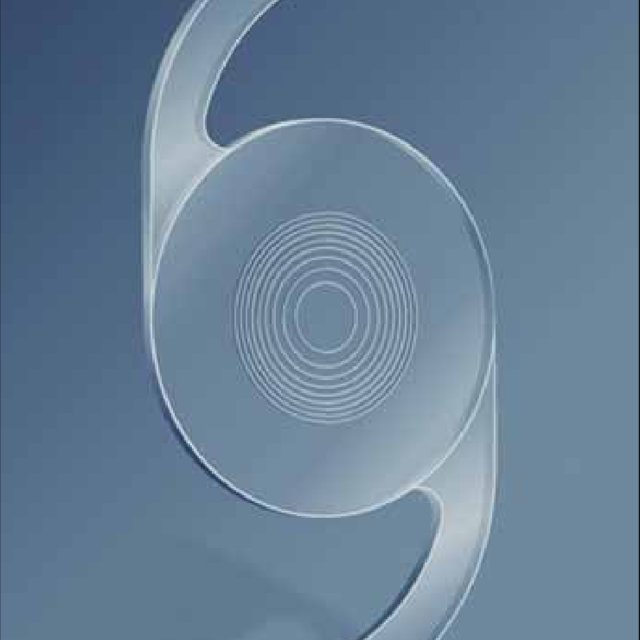 The type of lens implant chosen also affects the cost. As noted, during cataract surgery the clouded lens is removed from the eye and replaced with an artificial lens. A "monofocal" lens can be placed instead, correcting vision either for near or for distance. Because of this the patient will need to use glasses permanently after surgery, for distance or near depending on the lens chosen. One solution to this is to set one eye for near vision and the other for distance — but some patients find it difficult to adjust to the difference between the eyes, and depth perception may be affected.
How much does cataract surgery with a multifocal lens cost?
Over the years lenses have developed, and today there are also premium lenses — these too are implanted in place of the clouded lens removed during surgery. These lenses better mimic the function of the natural lens and so reduce the need to adjust vision for near or distance. Multifocal lenses are one particular type of premium lens, and they may eliminate the need for glasses after surgery. Another type of premium lens is the toric lens, intended for patients with astigmatism. The price range for premium lenses runs from about NIS 3,000 to NIS 8,000 per lens. The price is influenced among other things by the type of lens and the patient's type of insurance.
Just as you can choose the type of lens implanted, there is also the option of choosing the technology with which the operation is performed. The prevailing method today is called phaco (phacoemulsification), in which the surgeon uses a microsurgical blade to make small incisions at the edge of the cornea, through which the instruments are introduced. Using the phaco device, the lens is gently broken up and its contents aspirated, and the new lens is then inserted. The original incision heals without the need for sutures in most cases, and the method has been known for years to be effective and safe.
Laser cataract surgery cost
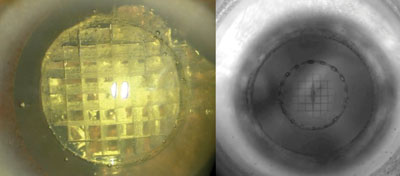 One of the latest developments in cataract surgery combines three-dimensional imaging and laser technology for more precise removal of the cataract. The surgeon uses the laser to create the openings at the edges of the cornea instead of cutting by hand. The laser is also used to break up and fragment the lens, which is then aspirated through tiny openings in the cornea, and a new lens is put in place.
Some health funds will require a contribution towards the cost of surgery with a laser, and sometimes the patient will have to pay the full amount themselves. The surgeon's fee for laser surgery may be higher, as may the cost of the operating theatre, since the equipment is more expensive. Here too, insurance may cover at least part of the costs. Usually, when a patient is asked to contribute towards the cost of the laser, this is an addition of roughly NIS 2,000–7,000.
Have a question about your eyes? Want a specialist opinion?